

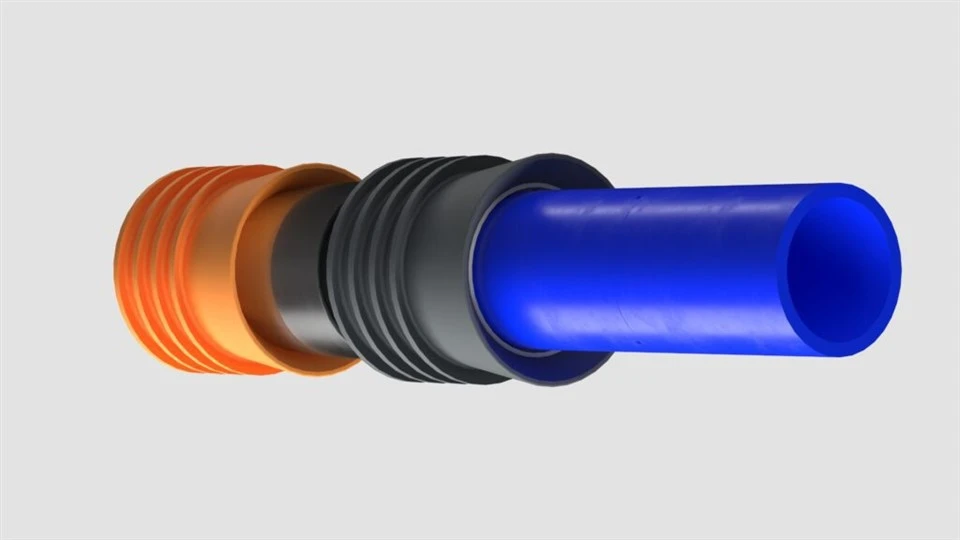


Product Introduction
Subsurface Release Plugs (SSR Plugs) are specialized downhole cementing tools designed to facilitate efficient and reliable cementing operations by creating a mechanical barrier between cement slurries and other wellbore fluids - preventing fluid contamination, ensuring accurate zonal isolation, and avoiding costly remedial operations and environmental hazards. Unlike conventional surface-release plugs that are released at the surface, our SSR Plugs are released from subsurface hangers - enabling accurate deployment in complex environments such as deepwater, high-pressure, and high-temperature (HPHT) wells, offshore subsea casing and liner hanger applications, and deviated wellbores where surface-release systems may not provide sufficient placement control. The plug set is pumped down the landing string to the target subsurface location, where a dart or ball is dropped to seat in the bottom plug and seal the lower plug bore. Subsequent pressurization of the cement column shears the shear pins (or bursts the shear disc) of the bottom plug, releasing it to travel to the landing collar or float collar at the casing bottom. Cement slurry extrudes through the bottom plug until the top plug latches with the bottom plug, completing the cement placement. An emergency rupture membrane on the bottom plug can be pierced if needed to establish a circulation channel, ensuring proper cement placement even in contingency scenarios. Constructed with high-strength composite mandrels - replacing conventional aluminum mandrels to significantly reduce drill-out time and minimize drill-bit damage - our SSR Plugs feature nitrile rubber seals, bronze and nylon wear components, toothed anti-rotational devices that mesh between top and bottom plugs to prevent spinning during drill-out, and color-coded identification (top plug black, bottom plug red/orange) for quick on-site recognition and reduced operational errors. The plugs are available in single-, dual-, or triple-plug configurations to meet diverse project needs - dual and triple-plug systems are recommended for longer strings to improve displacement volume accuracy and fluid separation. Combination plug sets for tapered strings and optional ball catchers are also available for added flexibility. Rated up to 10,000 PSI landing pressure with temperature resistance up to 175°F (79°C) - with high-temperature versions available for hotter well conditions - and compatible with casing sizes from 7" to 20" (custom sizes available), the Subsurface Release Plugs deliver precise cement slurry placement, reliable fluid separation, and easy PDC drill-out leaving a clean, debris-free wellbore for subsequent operations. Widely used in offshore cementing, liner cementing, deepwater and HPHT well cementing, tapered string cementing, wellbore zonal isolation, and casing pressure testing, these SSR Plugs minimize operational risk, reduce rig costs, and ensure wellbore integrity for modern oil and gas cementing projects worldwide.
Product Features
1. Precise Subsurface Release from Downhole Hangers
Equipped with a dual-dart operated system (or ball-driven release mechanism), the plugs are reliably released ahead of and behind cement slurries from subsurface hangers - rather than surface-release mechanisms - ensuring mechanical separation and eliminating fluid intermixing during pumping. This precise downhole deployment guarantees accurate cement slurry placement, critical for zonal isolation and well integrity in complex well environments including deepwater, offshore, and deviated wells where surface-release plugs may not provide sufficient placement control. The release can be triggered by dart drop or ball drop, with shear pin or shear disc activation depending on configuration.
2. Enhanced Drillability with Composite Mandrel
Replacing conventional aluminum mandrels with high-strength composite materials, our SSR Plugs significantly reduce drill-out time and minimize drill-bit damage. The composite plug cores are engineered for easy drilling with standard PDC bits - producing fine, easily-circulated cuttings that leave a clean wellbore with no residual debris to interfere with subsequent production or completion operations. This lowers rig costs, reduces non-productive time, and extends bit life compared to aluminum-mandrel alternatives.
3. High-Pressure Resistance with Temperature Options
Built with robust materials including nitrile rubber seals, bronze and nylon wear components, and high-strength composites with advanced sealing technology, the plugs can withstand extreme downhole conditions - up to 10,000 PSI landing pressure and 175°F (79°C) standard temperature rating. High-temperature versions are available for hotter well conditions. The robust construction ensures reliable sealing and structural integrity during cement pumping, displacement, and pressure testing operations in deepwater and high-pressure well environments.
4. Multiple Configuration Options (Single / Dual / Triple)
Available in single-, dual-, or triple-plug configurations to meet diverse project needs. Dual and triple-plug systems are recommended for longer strings - providing additional fluid separation barriers and improving displacement volume accuracy for critical cement jobs. We also offer combination plug sets for tapered strings (where casing diameter changes along the wellbore) and optional ball catchers for added flexibility in ball-driven release configurations. All configurations maintain the same high-pressure rating and drillability.
5. Anti-Rotational Design for Smooth Drill-Out
Incorporating toothed anti-rotational devices that mesh between top and bottom plugs when they latch together, our SSR Plugs prevent spinning during drill-out - ensuring smooth and efficient removal without damaging casing walls. The anti-rotational engagement locks the plug assembly against rotation as the PDC bit drills through, reducing drill-out time, preventing casing wall scoring, and ensuring consistent cutting production. This is particularly valuable in larger casing sizes (7"–20") where plug rotation during drill-out can cause extended mill time and casing damage.
6. Emergency Overflow / Rupture Membrane Protection
Equipped with an emergency rupture membrane (breakable disk) on the bottom plug, the system can establish a circulation channel even if both top and bottom plugs are accidentally released or if pressure anomalies occur - avoiding cementing construction failures and ensuring project continuity. The rupture membrane is designed to burst at a predetermined pressure, allowing fluid to bypass the plug assembly and re-establish circulation - a critical safety feature for high-value offshore and deepwater cementing operations where a lost circulation event could result in significant cost and well integrity risk.
7. Color-Coded Identification for Error Prevention
Top plugs are molded in black, and bottom plugs in red/orange - allowing for quick, unambiguous on-site identification and reducing operational errors during loading and installation. The color coding ensures that rig crews can instantly verify that the correct plug is loaded in the correct sequence (bottom plug first, then cement, then top plug), preventing misruns that could compromise cement placement and zonal isolation.
Working Principle
Our Subsurface Release Plugs operate through a simple yet reliable process, ensuring seamless integration into your cementing workflow:
Loading and Deployment
The bottom plug (red/orange) is loaded first into the landing string, followed by the cement slurry column, and then the top plug (black). The complete plug set is pumped down to the target subsurface location via the landing string. In dual- or triple-plug configurations, additional intermediate plugs are loaded in sequence to provide multiple fluid separation barriers for longer strings.
Release Activation
A dart or ball is dropped down the drill pipe / landing string, which seats in the bottom plug and seals the lower plug bore. Subsequent pressurization of the cement column above the seated dart/ball shears the shear pins (or bursts the shear disc) of the bottom plug, releasing it to travel downhole to the landing collar or float collar at the casing bottom. The release pressure is predetermined and documented for each configuration. In dual-dart operated systems, a second dart activates the top plug release.
Cement Displacement and Latching
Cement slurry extrudes through the bottom plug's bypass as the plug travels downhole, until the top plug latches with the bottom plug at the landing collar. When the top plug reaches the bottom plug, the anti-rotational teeth mesh together, locking the assembly. The emergency rupture membrane on the bottom plug can be pierced at a predetermined pressure if needed to establish a circulation channel - ensuring proper cement placement even if both plugs are accidentally released or if pressure anomalies occur.
Drill-Out
Once cementing is complete and the cement has cured, the plugs can be easily drilled out using conventional PDC bits on drill pipe or coiled tubing. The composite mandrel and non-metallic components break down into small, fine cuttings that are easily circulated back to surface - leaving a clean, debris-free wellbore with no residual components to interfere with subsequent production or completion operations. The anti-rotational design prevents the plug assembly from spinning during drill-out, reducing mill time and preventing casing wall damage.
Customization Capabilities
We offer comprehensive customization to match specific cementing project requirements:
• Custom casing sizes beyond the standard 7" to 20" range
• Custom pressure and temperature ratings (standard 10,000 PSI / 175°F; high-temperature versions available)
• Single, dual, or triple plug configuration selection based on string length and displacement requirements
• Combination plug sets for tapered strings (changing casing diameter)
• Optional ball catchers for ball-driven release configurations
• Custom mandrel material (high-strength composite standard; cast aluminum available on request)
• Custom elastomer seal materials (Nitrile standard; HNBR, Viton, Aflas for special wellbore fluids)
• Custom release mechanism (dual-dart operated or ball-driven shear pin / shear disc)
• Custom shear pin / shear disc release pressure settings
• Custom color coding for project-specific identification
• OEM/ODM branding and custom packaging
• Custom landing collar / float collar compatibility configurations
Lead time for custom orders: 15–25 working days depending on complexity; sample evaluation units available before bulk orders.
Quality Assurance
We are committed to delivering the highest quality Subsurface Release Plugs to our global clients. Each plug undergoes strict quality control checks throughout the manufacturing process - from raw material selection and component machining to assembly, pressure testing, and performance verification. Our quality management system is certified to ISO 9001:2015, and our cementing tools are manufactured in compliance with API Spec 10 standards for cementing equipment and materials.
Quality Control Process
• Raw Material Inspection: Composite mandrel materials, nitrile rubber seals, bronze and nylon components, and shear pins/discs sourced from approved suppliers with material test reports (MTR) verifying composition, mechanical properties, and temperature/pressure ratings. Composite materials tested for compressive strength, drillability, and chemical resistance.
• In-Process Control: Precision machining and molding with documented parameters; critical dimensions - plug OD, seal groove geometry, anti-rotational tooth profile, shear pin hole size, dart/ball seat diameter, and color coding - inspected at first-article, in-process, and final stages.
• Finished Product Testing:
- Hydrostatic Pressure Seal Test: Each assembled plug set tested at rated differential pressure (up to 10,000 PSI) with zero visible leakage
- Release Function Test: Sample plug sets tested to verify shear pin / shear disc release at predetermined pressure, dart/ball seating, and top-bottom plug latching with anti-rotational engagement
- Emergency Rupture Membrane Test: Bottom plug rupture membranes burst-tested to verify activation at predetermined pressure
- Drill-Out Test: Representative samples drilled with PDC bits to verify drill-out time, cutting characteristics, and anti-rotational performance
- Color Coding Verification: 100% visual verification that top plugs are black and bottom plugs are red/orange
- Dimensional Inspection: 100% verification of critical dimensions including plug OD, length, and seal groove geometry
Warranty
12-month warranty from date of shipment against manufacturing defects, with 24-hour technical support for cementing procedure, release pressure optimization, and troubleshooting.
Application Scenarios
1. Offshore Cementing Operations
Ideal for offshore cementing operations including subsea casing and liner hanger applications, where precise cement placement and reliable fluid separation are critical for well integrity in high-cost, high-risk environments. The subsurface release mechanism provides accurate deployment control from subsea hangers, and the emergency rupture membrane offers contingency circulation protection - essential for offshore operations where a cementing failure can result in significant financial and environmental consequences. The color-coded identification reduces operational errors on crowded offshore rig floors.
2. Liner Cementing Projects
Specifically designed for liner cementing projects including expandable liner hanger systems, where the plug must be released downhole rather than from the surface due to the liner hanger configuration. The SSR Plugs integrate with liner hanger running tools and landing collars, providing reliable cement slurry placement and fluid separation for primary liner cementing. Dual- and triple-plug configurations are commonly used for longer liner strings to improve displacement accuracy.
3. Deepwater and High-Pressure Well Cementing
Engineered for deepwater and high-pressure well cementing operations where downhole conditions demand robust pressure-holding capability and precise deployment control. Rated up to 10,000 PSI landing pressure, the plugs maintain reliable sealing during high-pressure cement pumping and displacement. The subsurface release mechanism provides better placement control than surface-release systems in deepwater wells with long landing strings and complex hydrostatic profiles. High-temperature versions are available for wells with elevated bottomhole temperatures.
4. Tapered String Cementing Operations
Combination plug sets are available for tapered string cementing operations where casing diameter changes along the wellbore - requiring plugs that can accommodate multiple casing sizes in a single cement job. The configurable design allows matching plug sizes to each casing section, ensuring proper sealing and fluid separation across the entire tapered string. This is particularly valuable in wells with multiple casing sections cemented in a single operation.
5. Wellbore Zonal Isolation and Fluid Separation
The primary function of SSR Plugs is to provide reliable mechanical separation between cement slurries and other wellbore fluids - preventing fluid contamination, ensuring accurate zonal isolation, and avoiding costly remedial cementing operations. The dual- and triple-plug configurations provide multiple separation barriers for critical zonal isolation applications where even minor fluid intermixing could compromise the cement sheath and long-term well integrity.
6. Casing Pressure Testing and Integrity Verification
After cement placement, the SSR Plugs can be used to facilitate casing pressure testing and wellbore integrity verification - providing a reliable downhole barrier for pressure testing the casing and cement sheath. The 10,000 PSI pressure rating supports high-pressure integrity testing, and the anti-rotational design ensures the plug remains stable during pressure cycling. Once testing is complete, the plugs are easily drilled out with PDC bits, leaving a clean wellbore for production.
FAQ
Q: What is the difference between subsurface release plugs and surface-release plugs?
A: The primary difference is the release location. Surface-release plugs are released at the surface (at the rig floor) and pumped down with the cement. Subsurface Release Plugs (SSR Plugs) are released from subsurface hangers downhole - typically from a liner hanger or landing collar assembly - using a dart or ball dropped from the surface to trigger the release. This provides more accurate placement control in complex well environments including deepwater, offshore, deviated wells, and liner cementing where surface-release plugs may not provide sufficient control. The subsurface release also allows the plug to be positioned precisely at the target depth before activation.
Q: What release mechanisms are available?
A: We offer two release mechanisms: (1) Dual-dart operated system - darts are pumped down with the cement to activate the plug release; and (2) Ball-driven shear pin release - a ball is dropped from the surface, seats in the plug, and pressurization shears the shear pins (or bursts the shear disc) to release the plug. The choice depends on the cementing design, landing string configuration, and operator preference. Both mechanisms provide reliable, predetermined release pressure. Optional ball catchers are available for ball-driven configurations.
Q: What configurations are available and how do I choose?
A: We offer single-, dual-, and triple-plug configurations. Single-plug systems are suitable for simpler, shorter cement jobs. Dual-plug systems (top + bottom) are the standard for most primary cementing operations, providing a fluid separation barrier ahead of and behind the cement. Triple-plug systems are recommended for longer strings or critical cement jobs - providing an additional intermediate separation barrier to improve displacement volume accuracy and reduce the risk of fluid contamination. Combination plug sets are available for tapered strings. Our engineering team can recommend the optimal configuration based on your well design, string length, and cementing objectives.
Q: How long does drill-out take and what equipment is needed?
A: The composite mandrel and non-metallic components are easily drilled out with standard PDC bits on drill pipe or coiled tubing. Drill-out time depends on plug size, configuration (single/dual/triple), and well conditions - but the composite construction is significantly faster than aluminum-mandrel alternatives and produces fine, easily-circulated cuttings. The anti-rotational design prevents the plug from spinning during drill-out, further reducing mill time. Contact our engineering team for estimated drill-out times for your specific casing size and configuration.
Q: What is the emergency rupture membrane and when is it needed?
A: The emergency rupture membrane (breakable disk) is a safety feature on the bottom plug that is designed to burst at a predetermined pressure - establishing a circulation channel through the plug assembly if both top and bottom plugs are accidentally released, or if pressure anomalies occur during cementing. This prevents a complete loss of circulation (which could result in cementing failure and well integrity risk) and allows the operation to continue. It is a critical contingency feature for high-value offshore, deepwater, and critical cementing operations.
Q: What is the MOQ, delivery time, and payment method?
A: The MOQ is 1 set for standard models. Standard products ship within 7–15 working days after deposit; custom sizes, configurations, or high-temperature versions require 15–25 working days. We ship from Shanghai or Ningbo port. Payment terms include T/T (30% deposit, 70% before shipment), L/C at sight, and Western Union. Sample evaluation units available for testing before bulk orders.
Q: What certifications does the plug have?
A: The Subsurface Release Plugs are manufactured under ISO 9001:2015 quality management system and in compliance with API Spec 10 standards for cementing equipment and materials. CE certification and third-party inspection (BV, SGS, DNV) are available on request. Each plug set undergoes 100% hydrostatic pressure seal testing and release function verification before shipment, with material test reports (MTR), pressure test certificates, and release pressure settings provided with every order.
Hot Tags: Subsurface Release Plugs (SSR) | Cementing Tool | 10,000 PSI | Dual-Dart / Ball-Driven Release | Composite Mandrel | Anti-Rotational | Emergency Rupture Membrane | Single/Dual/Triple Config, China Subsurface Release Plugs (SSR) | Cementing Tool | 10,000 PSI | Dual-Dart / Ball-Driven Release | Composite Mandrel | Anti-Rotational | Emergency Rupture Membrane | Single/Dual/Triple Config manufacturers, suppliers, factory, Dissolvable Frac Plug, Double Slip Soluble Bridge Plug, Double Slip Composite Bridge Plug, Easy Drill Bridge Plug, Single Slip Composite Bridge Plug, Hybrid Frac Plug
| Item | Specification | Remarks |
|---|---|---|
| Product Type | Subsurface Release Plug (SSR Plug) | Downhole cementing tool (not a frac plug) |
| Casing Size | 7" – 20" (177.8mm – 508.0mm) | Custom sizes available |
| Maximum Working Pressure | Up to 10,000 PSI (68.95 MPa / 689.5 bar) | Landing pressure |
| Maximum Working Temperature | 175°F (79°C) standard; high-temp versions available | - |
| Mandrel Material | High-strength composite (standard); cast aluminum (optional) | Composite for faster drill-out |
| Seal Material | Nitrile rubber (standard); HNBR/Viton/Aflas (custom) | - |
| Other Components | Bronze, nylon wear components | - |
| Configuration | Single, Dual, or Triple Plug | Dual/triple for longer strings |
| Release Mechanism | Dual-dart operated / Ball-driven shear pin or shear disc release | Predetermined release pressure |
| Anti-Rotational | Toothed anti-rotational devices (top-bottom plug mesh) | Prevents spinning during drill-out |
| Emergency Protection | Rupture membrane (breakable disk) on bottom plug | Establishes circulation if plugs accidentally released |
| Color Coding | Top Plug: Black; Bottom Plug: Red/Orange | Quick on-site identification |
| Ball Catcher | Optional (for ball-driven configurations) | - |
| Combination Sets | Available for tapered strings | Multiple casing sizes in one job |
| Drillability | Easily drillable with PDC bits; fine cuttings, clean wellbore | Composite mandrel |
| Landing Collar / Float Collar | Compatible with standard landing collars and float collars | - |
| Application | Offshore, liner, deepwater, HPHT, tapered string cementing; zonal isolation; casing pressure testing | - |
| Standard / Certification | ISO 9001:2015, API Spec 10 | CE, BV/SGS/DNV on request |
| MOQ | 1 set (standard); custom MOQ on request | - |
| Delivery Time | 7 – 15 working days (standard); 15 – 25 working days (custom) | - |
| Packaging | Individual plastic wrap + export wooden crate | - |
| Configuration | Plugs Per Set | Recommended Application | Fluid Separation Barriers | Typical String Length |
|---|---|---|---|---|
| Single Plug | 1 | Simple, short cement jobs; testing | 1 | Short |
| Dual Plug | 2 (top + bottom) | Standard primary cementing | 2 (ahead + behind cement) | Medium |
| Triple Plug | 3 (top + intermediate + bottom) | Long strings, critical cement jobs | 3 | Long |
| Combination Set | Custom | Tapered strings (multiple casing sizes) | Custom | Variable |


