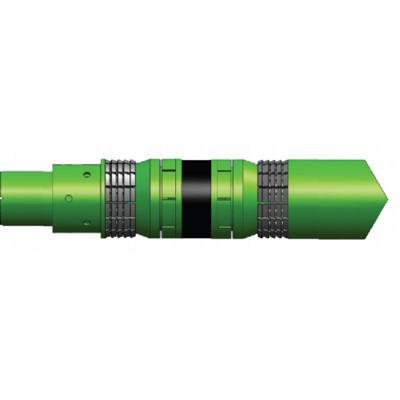
Product introduction
The PGA Degradable Bridge Plug - also known as an easy-drill or no-drill bridge plug - is a next-generation temporary zonal isolation tool engineered for multi-stage hydraulic fracturing and well re-completion operations. Unlike conventional composite or cast iron bridge plugs that require time-consuming mill-out or coiled tubing interventions after stimulation, this plug is constructed entirely from Polyglycolic Acid (PGA) - a biodegradable polymer that hydrolyzes completely under downhole temperature and pressure conditions into non-toxic carbon dioxide (CO₂) and water (H₂O) - leaving zero residue, causing no formation permeability damage, and requiring no post-frac milling, acidizing, or cleanout operations. The plug features high-strength degradable rubber sealing sleeves and a spray-type slip anchoring structure that forms a tight, reliable seal against the casing wall during stimulation. Rated to 10,000 PSI (68.9 MPa) differential pressure with an operating temperature range of 60°C to 204°C (140°F to 400°F) - among the highest temperature ratings in the degradable plug category - and maximum compressive strength of 550–650 MPa, the plug provides stable isolation during the entire fracturing process without deformation or failure. The degradation time is fully customizable from 2 to 10 days based on downhole temperature, fluid mineralization, and construction requirements, with advanced material modification technology solving the challenge of slow degradation in medium-to-low temperature zones. Compatible with standard industry setting tools and supporting drop-ball, ball-in-place, and optional pump-down ring deployment methods - with running speeds up to 500 ft/min and pump-down rates up to 18 bbl/min - the plug adapts to casing sizes from 3¼" to 6" (custom sizes available) and various wellbore trajectories including horizontal, deviated, and vertical wells. By eliminating expensive mill-out and cleanup operations, the PGA degradable bridge plug shortens the well completion cycle and reduces operational costs by 30%–50% compared to traditional metal bridge plugs, while its zero-residue degradation protects formation permeability and meets global environmental protection standards. The plug has been successfully deployed in over 150 wells across major Chinese oilfields - including Fuling Shale Gas Field, Jianghan Oilfield, and Southwest Oilfield - with proven performance in unconventional oil and gas development (shale gas, tight oil, coalbed methane), old well re-fracturing, deep and medium-depth well construction, and environmentally sensitive areas including offshore operations and ecological reserves.
Product Features
1. Fully Degradable, Zero Residue, Environmentally Friendly
Constructed from 100% Polyglycolic Acid (PGA) with high-strength degradable rubber sealing elements, the plug degrades completely under downhole temperature and pressure conditions into non-toxic carbon dioxide (CO₂) and water (H₂O) - leaving zero residue, causing no formation permeability damage, and eliminating the need for acidizing, milling, or coiled tubing cleanup operations. Unlike magnesium-aluminum alloy dissolvable plugs that produce metallic salts and require chloride ions for degradation, PGA hydrolyzes in water-based fluids regardless of salinity, making it compatible with a broad range of completion fluid systems and suitable for environmentally sensitive areas including offshore operations and ecological reserves where zero-discharge standards apply.
2. Superior Mechanical Performance with High Temperature Rating
The PGA material features excellent mechanical strength, heat resistance, and pressure-bearing capacity, with maximum compressive strength of 550–650 MPa. The plug withstands downhole temperatures up to 204°C (400°F) - among the highest in the degradable plug category - and differential pressures up to 10,000 PSI (68.9 MPa), ensuring stable isolation during the entire fracturing process without deformation, seal failure, or slippage. This high-temperature capability makes it suitable for deep and medium-depth wells where lower-temperature-rated degradable plugs cannot be used.
3. Predictable and Controllable Degradation Across Temperature Ranges
Through advanced PGA material modification technology, the degradation time is fully customizable from 2 to 10 days based on downhole temperature (60–204°C operating range), fluid mineralization, and specific construction requirements. The formulation solves the common challenge of slow or incomplete degradation in medium-to-low temperature zones, ensuring complete and predictable degradation without residue blockage. Degradation rate is verified through laboratory immersion testing for each production batch, and custom formulations are available to match specific wellbore conditions and operational timelines.
4. Significant Cost Savings and Operational Efficiency
By eliminating expensive post-frac mill-out, debris removal, and coiled tubing intervention operations, the PGA degradable bridge plug shortens the well completion cycle and reduces labor and equipment costs by 30%–50% compared to traditional metal or composite bridge plugs requiring drill-out. The zero-residue degradation also eliminates the risk of stuck pipe or casing damage associated with milling operations, and reduces water consumption during post-frac cleanup. Faster production startup - with no wait time for intervention operations - further improves well economics.
5. Easy Operation with Multiple Deployment Options and Wide Compatibility
Compatible with standard industry setting tools, the plug supports three deployment methods: drop-ball, ball-in-place, and optional pump-down rings - providing flexibility for different wellbore conditions and operational preferences. It can be run at speeds up to 500 ft/min with pump-down rates up to 18 bbl/min, adapting to various casing sizes (3¼" to 6", custom sizes available) and wellbore trajectories including horizontal, deviated, and vertical wells. No special equipment or training is required, and the plug is compatible with standard wireline, tubing, and coiled tubing running procedures.
6. Reliable Isolation with Spray-Type Slip and Degradable Rubber Seals
Equipped with high-strength degradable rubber sealing sleeves and a spray-type slip anchoring structure, the plug forms a tight, pressure-tight seal against the casing wall - ensuring no fluid channeling between zones during high-pressure fracturing. The spray-type slip design provides uniform, reliable casing engagement without damaging the casing, and the degradable rubber seals maintain elasticity and sealing performance throughout the stimulation period. The plug assists in creating complex fracture networks during multi-stage fracturing, enhancing reservoir stimulation effectiveness.
Working Principle
The PGA Degradable Bridge Plug operates in four phases - deployment, isolation and fracturing, degradation, and production:
Phase 1: Deployment and Setting
The plug is run into the wellbore using standard industry setting equipment via one of three deployment methods: drop-ball (ball dropped from surface to activate setting), ball-in-place (ball pre-installed in the plug, activated by pressure), or pump-down ring (pumped to depth with fluid, suitable for horizontal wells). Running speeds up to 500 ft/min and pump-down rates up to 18 bbl/min enable fast, efficient deployment. Once on depth, the setting tool activates the spray-type slip system - slips expand and anchor to the casing wall - while the high-strength degradable rubber sealing sleeves compress against the casing ID to form a pressure-tight seal. After setting, the setting tool releases and is retrieved.
Phase 2: Isolation and Fracturing
Once set, the spray-type slip anchoring and degradable rubber seals create a reliable isolation barrier. High-pressure fracturing fluid is pumped through perforations above the plug to create fractures in the target formation. The PGA structural body - with compressive strength of 550–650 MPa - maintains full mechanical integrity during this phase, withstanding differential pressures up to 10,000 PSI and temperatures up to 204°C. The plug contains pressure without slippage, deformation, or seal leakage throughout the entire stimulation operation.
Phase 3: Degradation
After fracturing operations are complete, the plug is exposed to downhole fluids at formation temperature. Polyglycolic Acid (PGA) undergoes hydrolysis - the polymer chains break down in the presence of water and heat, ultimately converting entirely into non-toxic carbon dioxide (CO₂) and water (H₂O). The degradation rate is temperature-dependent: higher temperatures accelerate hydrolysis, while lower temperatures slow it. The customizable PGA formulation ensures the plug maintains structural integrity during the active fracturing period and degrades completely within the specified 2–10 day window afterward. The degradable rubber seals also break down, and the entire plug assembly - including slips, seals, and structural body - degrades with zero solid residue.
Phase 4: Production
Once fully degraded, the wellbore is completely clear of obstructions, restoring full drift diameter and allowing oil and gas to flow freely to the surface. No mill-out, acidizing, coiled tubing, or cleanout intervention is required - reducing downtime, eliminating intervention costs, and accelerating production startup compared to conventional composite or cast iron plugs. The CO₂ and H₂O degradation products are non-toxic and cause no damage to formation permeability.
Product Performance Test & Field Application
The PGA Degradable Bridge Plug has undergone rigorous indoor performance testing and large-scale field application, with proven results:
Indoor Laboratory Testing
Under controlled test conditions of 120°C and 70 MPa differential pressure, the plug maintained stable zonal isolation for more than 8 hours with zero visible leakage - confirming pressure containment and seal integrity at rated conditions. Degradation testing confirmed complete degradation within 5 days at 120°C in water-based fluid, leaving zero solid residue. Compressive strength testing verified structural performance within the 550–650 MPa specification range.
Field Application - Proven in Over 150 Wells
The plug has been successfully deployed in over 150 wells across major Chinese oilfields, including Fuling Shale Gas Field, Jianghan Oilfield, and Southwest Oilfield, covering shale gas, tight oil, coalbed methane, and old well re-fracturing applications:
• Fuling Shale Gas Field: Multi-stage horizontal well fracturing with reliable zonal isolation and complete post-frac degradation, eliminating mill-out operations and reducing completion cycle time.
• Jianghan Oilfield: Application in old well re-fracturing projects, avoiding casing damage associated with traditional plug milling and fishing operations.
• Southwest Oilfield: Deep well applications confirming high-temperature performance and reliable isolation in complex downhole environments.
Field performance data confirms stable setting, reliable pressure containment during stimulation, and predictable complete degradation - with zero reported cases of residue blockage or incomplete degradation across all deployed wells.
Quality Assurance
Every PGA Degradable Bridge Plug is manufactured under an ISO 9001:2015 certified quality management system and designed in accordance with API 11D1 specifications for downhole packers and bridge plugs. Our quality assurance process covers the full product lifecycle:
Raw Material Control
PGA resin is sourced from approved suppliers and accompanied by material test reports (MTR) verifying molecular weight, melt flow index, intrinsic viscosity, and purity - all critical parameters that directly affect degradation rate and mechanical strength. Each batch undergoes spectroscopic analysis and degradation rate verification testing. High-strength degradable rubber sealing materials are tested for hardness, tensile strength, compression set, and fluid compatibility before release to production.
In-Process Manufacturing Control
PGA components are injection-molded or machined under controlled temperature and humidity conditions to prevent premature hydrolysis. Critical dimensions - outer diameter, inner diameter, seal groove dimensions, slip tooth geometry, and mating interfaces - are inspected at first-article, in-process, and final inspection stages using calibrated micrometers, bore gauges, and coordinate measuring machines. The spray-type slip assembly is tested for uniform expansion and release force.
Performance Testing (100% of production)
• Hydrostatic Pressure Seal Test: Each assembled plug is tested at rated differential pressure (10,000 PSI) with zero visible leakage as the pass criterion
• Setting Function Test: Sample plugs from each production lot are set in test casing to verify slip expansion, seal compression, and deployment function for all three methods (drop-ball, ball-in-place, pump-down)
• Degradation Verification Test: Representative samples from each PGA batch are immersed in controlled-temperature water-based fluid to confirm degradation rate matches the ordered specification
• Compressive Strength Test: PGA material samples tested to verify 550–650 MPa range
• Dimensional Inspection: 100% verification of critical mating dimensions against engineering drawings
Warranty and Support
We provide an 18-month warranty from the date of shipment against manufacturing defects in materials and workmanship. Our engineering team provides 24-hour online technical support for product selection, degradation rate customization, running procedures, and field troubleshooting.
Application Scenarios
1. Unconventional Oil and Gas Well Multi-Stage Fracturing
The core application scenario - suitable for large-scale multi-stage fracturing of horizontal wells in shale gas, tight oil, and coalbed methane developments. The zero-residue degradation is particularly valuable in low-pressure and low-salinity gas wells where drill cuttings flowback from conventional plug mill-out can be problematic, and the high-temperature rating (up to 204°C) covers deep unconventional reservoirs. Proven in Fuling Shale Gas Field and other major shale gas developments.
2. Old Well Re-Fracturing and Recompletion
Suitable for repeat fracturing and recompletion of aging oil and gas wells. The fully degradable design avoids the risk of casing damage and wellbore structure compromise associated with milling and fishing operations of traditional bridge plugs - a critical advantage in older wells where casing integrity may be compromised. The zero-residue degradation also prevents formation damage in mature reservoirs where permeability is already reduced.
3. Deep and Medium-Depth Well Construction
The high temperature rating (up to 204°C / 400°F) and high compressive strength (550–650 MPa) make this plug suitable for deep and medium-depth well multi-stage fracturing operations with long horizontal sections and multiple fracturing stages - environments where lower-temperature-rated degradable plugs cannot maintain structural integrity. Proven in Southwest Oilfield deep well applications.
4. Environmentally Sensitive Areas and Offshore Operations
The 100% PGA construction degrades into non-toxic CO₂ and H₂O with zero solid residue - meeting strict environmental protection standards for oil and gas development in environmentally sensitive areas including offshore operations, ecological reserves, and regions with zero-discharge regulations. Unlike magnesium-aluminum alloy dissolvable plugs that produce metallic salt byproducts, PGA degradation products are entirely non-toxic and require no special handling or disposal.
FAQ
Q: How long does the PGA Degradable Bridge Plug take to degrade completely?
A: The standard degradation time is 2 to 10 days, customizable based on downhole temperature, fluid mineralization, and specific construction requirements. Higher temperatures accelerate PGA hydrolysis, while lower temperatures slow it. For example, at 120°C in water-based fluid, complete degradation typically occurs within approximately 5 days. At lower temperatures (60–80°C), degradation may take 8–10 days. We can customize the PGA formulation to match your specific well conditions and operational timeline - extended or accelerated degradation formulations are available on request.
Q: Can it withstand the high pressure and temperature of deep wells?
A: Yes. The PGA Degradable Bridge Plug has a rated differential pressure of up to 10,000 PSI (68.9 MPa) and an operating temperature range of 60°C to 204°C (140°F to 400°F), with maximum compressive strength of 550–650 MPa. This high-temperature rating - among the highest in the degradable plug category - makes it suitable for deep and medium-depth wells. The plug has been verified by field tests in multiple deep well applications in Southwest Oilfield. Note: the 10,000 PSI rating refers to differential pressure across the plug; formation fracturing treatment pressures may exceed this value as they include hydrostatic head.
Q: Is there any residue after degradation? Will it damage the formation?
A: No residue at all. The PGA material degrades completely through hydrolysis into non-toxic carbon dioxide (CO₂) and water (H₂O) - with zero solid residue, no metallic salts, and no particulate matter. The degradation products will not block the wellbore, reduce formation permeability, or require cleanup. This is a key advantage over traditional metal bridge plugs (which leave metal cuttings after milling) and magnesium-aluminum alloy dissolvable plugs (which produce metallic salt byproducts). The zero-residue property makes it suitable for environmentally sensitive areas and offshore operations.
Q: What deployment methods are available, and what casing sizes does it fit?
A: The plug supports three deployment methods: drop-ball, ball-in-place, and optional pump-down rings - compatible with standard industry setting tools and wireline, tubing, or coiled tubing running procedures. Running speeds up to 500 ft/min and pump-down rates up to 18 bbl/min. Standard casing sizes include 3¼", 3½", 4½", 5½", and 6" (82.6mm to 152.4mm), with custom sizes available for other casing dimensions. Contact our engineering team for size-specific setting tool compatibility details.
Q: Do you provide samples and technical support?
A: Yes. Sample evaluation units are available for qualified projects to verify product performance and degradation characteristics. Our professional technical team provides 24-hour online support, including product selection, degradation rate customization based on your well data, running procedure guidance, and after-sales troubleshooting. For bulk order customers, we can provide on-site technical support and training.
Q: What is the delivery time, MOQ, and payment method?
A: The MOQ is 1 piece for standard models. Standard products ship within 7–15 working days after deposit; custom sizes or degradation formulations require 20–30 working days. We ship from Shanghai or Ningbo port. Payment terms include T/T (30% deposit, 70% before shipment), L/C at sight, and Western Union. Flexible payment terms can be negotiated based on order quantity.
Hot Tags: PGA Degradable Bridge Plug | API 11D1 | 10,000 PSI | 204°C | Zero Residue | Easy Drill, China PGA Degradable Bridge Plug | API 11D1 | 10,000 PSI | 204°C | Zero Residue | Easy Drill manufacturers, suppliers, factory, Easy Drill Bridge Plug, Single Slip Soluble Bridge Plug, Series Composite Bridge Plug, Big Bore Bridge Plug, Composite Frac Plug, Dissolvable Frac Plug
| Item | Specification | Remarks |
|---|---|---|
| Product Type | PGA Degradable Bridge Plug (Fully Degradable, Zero Residue, No Mill-Out) | Also referred to as easy-drill / no-drill bridge plug; API 11D1 compliant |
| Material | Polyglycolic Acid (PGA) - structural body; High-strength degradable rubber - sealing elements | 100% degradable; degrades into CO₂ and H₂O |
| Maximum Compressive Strength | 550 – 650 MPa | PGA material specification |
| Pressure Rating | Up to 10,000 PSI (68.9 MPa / 689.5 bar) | Differential pressure across plug |
| Temperature Rating | 60°C – 204°C (140°F – 400°F) | Among highest in degradable plug category |
| Degradation Mechanism | Hydrolysis (PGA polymer chain breakdown in water-based fluid) | Produces CO₂ + H₂O; zero solid residue |
| Degradation Medium | Water-based fluids, brine, KCl solution, freshwater | Degradation rate temperature-dependent |
| Degradation Time | 2 – 10 days (standard, customizable) | Faster at higher temperature; custom formulations available |
| Residue After Degradation | 0% - fully degrades into CO₂ and H₂O | No metallic salts, no particulates |
| Casing Size Compatibility | 3¼" (82.6mm), 3½" (88.9mm), 4½" (114.3mm), 5½" (139.7mm), 6" (152.4mm) | Custom sizes available |
| Anchoring Type | Spray-type slip | Uniform casing engagement |
| Seal Type | High-strength degradable rubber sleeves | - |
| Deployment Method | Drop-ball, ball-in-place, optional pump-down rings | Compatible with standard setting tools |
| Running Speed | Up to 500 ft/min | - |
| Pump-Down Rate | Up to 18 bbl/min | For horizontal well deployment |
| Setting Tool Compatibility | Standard oilfield setting tools | Contact for size-specific compatibility |
| Standard / Certification | API 11D1, ISO 9001:2015 | CE/PED, BV/SGS/DNV on request |
| Field Application Track Record | 150+ wells (Fuling Shale Gas, Jianghan, Southwest Oilfield) | - |
| MOQ | 1 piece (standard); custom formulation MOQ on request | - |
| Delivery Time | 7 – 15 working days (standard); 20 – 30 working days (custom) | - |
| Packaging | Individual plastic tube + export wooden crate | Desiccant included; humidity-controlled for PGA storage |
| Casing Size | Casing OD | Casing Weight Range | Deployment Method |
|---|---|---|---|
| 3¼" (82.6mm) | 82.6mm | Per drawing | Drop-ball / Ball-in-place |
| 3½" (88.9mm) | 88.9mm | Per drawing | Drop-ball / Ball-in-place / Pump-down |
| 4½" (114.3mm) | 114.3mm | Per drawing | Drop-ball / Ball-in-place / Pump-down |
| 5½" (139.7mm) | 139.7mm | Per drawing | Drop-ball / Ball-in-place / Pump-down |
| 6" (152.4mm) | 152.4mm | Per drawing | Drop-ball / Ball-in-place |