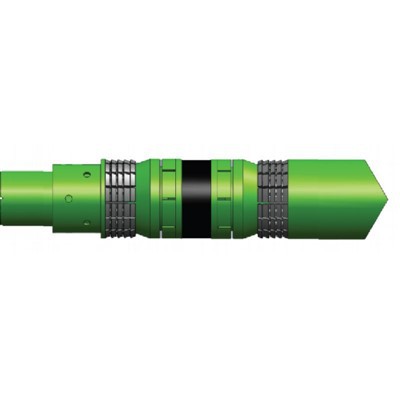
Product Introduction
The Shorty Composite Bridge Plug is a non-metallic isolation tool specifically engineered for the oil and gas industry, designed to address the growing demand for efficient, cost-effective downhole solutions with a compact, short-profile form factor. Unlike traditional metal or standard-length composite bridge plugs, our shorty design features a compact, optimized structure with a focus on quick deployment, minimal wellbore obstruction, and easy drill-out - making it a high-performance solution for multi-stage completions, intervention operations, and wells with restricted or deviated wellbores where longer plugs may be difficult to place or may obstruct subsequent operations. Crafted from high-strength composite materials - including glass-reinforced epoxy resin and advanced thermoplastics - it offers superior chemical resistance, low permeability, and exceptional tensile strength, ensuring reliable performance in harsh downhole environments including corrosive fluids, high temperatures, and high-stress conditions. The ceramic or powdered metal slip buttons provide secure, high-grip anchoring to the casing wall, and the dual-rubber seal system ensures positive, leak-proof isolation even under high differential pressures. The single-component slip design eliminates the risk of premature setting during deployment, ensuring safe and reliable operation even in complex well trajectories. Ideal for both temporary and permanent isolation needs, this plug is compatible with standard wireline, coiled tubing, or threaded pipe deployment using No. 20 or dedicated shorty setting tools - allowing for flexible deployment across various well configurations without specialized equipment. Its short, streamlined design minimizes wellbore obstruction and reduces the volume of material that must be drilled out after use, while its lightweight construction - with a specific gravity ranging from 1.3 to 2.1 - enables faster run-in speeds, easier handling on-site, and lower transportation costs compared to metallic or standard-length composite alternatives. Rated up to 10,000 PSI with temperature resistance up to 350°F (177°C), and compatible with casing sizes from 4½" to 9-5/8", the Shorty Composite Bridge Plug delivers reliable zonal isolation for multi-stage fracturing, well testing, acidizing, temporary and permanent well abandonment, and HPHT well operations - with drill-out times of 30 minutes or less and small, uniform cuttings that circulate out easily. Certified to ISO 9001 and ISO 14310 standards, this compact composite plug combines the pressure-holding reliability of a full-size bridge plug with the operational advantages of a short, lightweight, fast-drilling profile - delivering consistent results while reducing operational costs and rig time for well operators worldwide.
Product Features
1. Compact Shorty Design for Restricted Wellbores
Optimized for tight wellbore spaces, the short profile reduces wellbore obstruction and simplifies deployment in deviated or horizontal wells - where longer plugs may encounter difficulty passing through restrictions, doglegs, or completion equipment. Its streamlined, shortened structure also minimizes the amount of material to be drilled out, cutting down on mill time significantly and reducing the volume of cuttings that must be circulated out. The shorty design is particularly valuable in wells with limited available setting depth, restricted completion intervals, or where multiple plugs are set in close proximity. (Specific overall length per size available from factory - the shorty profile is engineered to be substantially shorter than standard composite bridge plugs for equivalent casing sizes.)
2. High-Strength Composite Construction with Low Specific Gravity
Made from proprietary composite fibers including glass-reinforced epoxy resin and advanced thermoplastic composites, the plug offers excellent resistance to chemical erosion, fatigue, and high downhole temperatures - outperforming traditional metal plugs in corrosive environments including CO2, H2S, and brine. With a specific gravity of only 1.3 to 2.1, the lightweight design reduces handling effort on the rig floor, lowers transportation costs, and enables faster run-in speeds - particularly beneficial for coiled tubing and wireline deployment where tool weight affects conveyance efficiency. The low-permeability composite body prevents fluid ingress and maintains sealing integrity over time.
3. Rapid 30-Minute Drill-Out Capability
Engineered for quick and efficient removal, the composite material breaks down into small, uniform cuttings that can be easily circulated back to the surface - extending PDC bit life and reducing drill-out time to 30 minutes or less in optimal conditions. The reduced material volume of the shorty profile further accelerates drill-out compared to standard-length plugs, and the non-metallic construction produces fine cuttings that do not damage the casing or cement sheath. Multiple plugs can typically be drilled out in a single trip without bit changes, reducing trip time and operational costs in multi-stage completion programs.
4. Superior Dual-Seal & Ceramic Slip Anchoring
Equipped with a dual-rubber seal system for redundant, leak-proof sealing and advanced slip technology featuring ceramic or powdered metal buttons - the plug ensures positive isolation even under high differential pressures up to 10,000 PSI. The dual-seal configuration provides primary and secondary sealing elements for enhanced reliability, and the high-grip ceramic/powdered metal slip buttons embed securely into the casing wall - including harder casing grades - preventing slippage and ensuring consistent anchoring performance post-setting. The slip system provides bidirectional anchoring for pressure from either direction.
5. Cost-Efficient Operation with Reduced Rig Time
By reducing rig time through faster deployment and shorter drill-out, minimizing drill-out costs through reduced material volume, and eliminating the need for specialized removal tools, the Shorty Composite Bridge Plug helps lower overall operational expenses while maintaining high performance. Its versatility across deployment methods and casing sizes also eliminates the need for multiple tool types, streamlining inventory management for service companies. The lightweight design further reduces transportation and handling costs compared to all-metallic alternatives.
6. Versatile Compatibility with No. 20 / Shorty Setting Tools
Compatible with standard No. 20 setting tools or dedicated shorty setting tools, as well as wireline, coiled tubing, or threaded pipe deployment - making it suitable for a wide range of well completion and intervention scenarios including multi-stage fracturing, zonal isolation, and well abandonment. The universal setting interface allows the plug to be run with commonly available setting equipment, reducing the need for specialized tooling and inventory. No additional crossover tools are required for standard No. 20 setting tool compatibility.
7. Premature Setting Prevention via Single-Component Slip Design
The single-component slip design eliminates the risk of premature setting during deployment - ensuring safe and reliable operation even in complex well trajectories including high dogleg severity, deviated, and horizontal wells. Unlike multi-component slip systems that can partially set during run-in due to friction or pressure surges, the single-component design maintains the slips in the retracted position until the setting tool applies the designated setting force, preventing misruns and ensuring the plug reaches the target depth before activation.
Working Principle
The Shorty Composite Bridge Plug operates through a simple yet robust mechanism, ensuring reliable setting and isolation:
Deployment
The plug is connected to a compatible setting tool - standard No. 20 or dedicated shorty setting tool - and conveyed to the target depth using wireline, coiled tubing, or threaded pipe. The compact short profile allows the plug to pass through wellbore restrictions, doglegs, and completion equipment more easily than longer plugs. The single-component slip design holds the slips in the retracted position during run-in, preventing premature setting. The lightweight construction (SG 1.3–2.1) facilitates faster conveyance, especially in coiled tubing and wireline applications.
Setting
The setting tool applies hydraulic or mechanical force, which shears the release pin and drives the cones forward to compress the dual-rubber seal elements and expand the slips. The slips - equipped with high-grip ceramic or powdered metal buttons - embed into the casing wall, anchoring the plug securely in both directions, while the dual-rubber seal elements expand to create a leak-proof barrier between zones. When the setting force reaches the predetermined value, the setting tool releases from the plug and is retrieved to surface. The single-component slip design ensures the slips do not prematurely engage before the designated setting force is applied.
Isolation
Once set, the plug effectively isolates the target zone, preventing fluid flow between different sections of the wellbore - enabling safe and efficient well operations including fracturing, well testing, acidizing, and zonal isolation. The dual-seal system provides redundant sealing, and the ceramic/powdered metal slip buttons maintain secure anchoring under pressure cycling and dynamic conditions. The plug is rated to 10,000 PSI and 350°F.
Removal
When isolation is no longer needed, the plug can be quickly drilled out using conventional PDC milling tools on coiled tubing or drill pipe. The composite material breaks down into small, manageable cuttings that are easily circulated back to the surface, minimizing the risk of wellbore obstruction. The reduced material volume of the shorty design and the non-metallic construction ensure fast drill-out (30 minutes or less) with minimal casing damage and extended bit life.
Customization Capabilities
We offer comprehensive customization to match specific well conditions:
• Custom casing sizes beyond the standard 4½" to 9-5/8" range
• Custom overall length for specific restricted wellbore applications
• Custom pressure and temperature ratings (standard 10,000 PSI / 350°F)
• Custom elastomer seal materials (Nitrile, HNBR, Viton, Aflas) for special wellbore fluids
• Custom slip button material (ceramic, powdered metal, or cast iron) for special casing grades
• Setting tool compatibility options (No. 20, shorty, or other brands)
• Custom deployment method configuration
• Ball-drop or flo-back configuration options (if applicable)
• OEM/ODM branding and custom packaging
• Custom color coding for size identification
Lead time for custom orders: 15–25 working days depending on complexity; sample evaluation units available before bulk orders.
Quality Assurance
We adhere to strict quality control standards throughout the manufacturing process of the Shorty Composite Bridge Plug, from raw material selection to final assembly and testing. Our production facilities are certified to ISO 9001:2015 quality management system, and the plug is validated to ISO 14310 standards for downhole isolation tools.
Quality Control Process
• Raw Material Inspection: Glass-reinforced epoxy resin, thermoplastic composites, ceramic/powdered metal slip buttons, and elastomer seal materials sourced from approved suppliers with material test reports (MTR) verifying composition, mechanical properties, specific gravity, and temperature/pressure ratings. Composite materials tested for tensile strength, compressive strength, chemical resistance, and permeability.
• In-Process Control: Precision machining and molding with documented parameters; critical dimensions - slip button geometry, dual-seal element groove, setting tool connection, release pin shear value, and overall length (shorty profile) - inspected at first-article, in-process, and final stages.
• Finished Product Testing:
- Hydrostatic Pressure Seal Test: Each assembled plug tested at rated differential pressure (up to 10,000 PSI) with zero visible leakage
- Setting Function Test: Sample plugs set in test casing via No. 20 setting tool to verify slip expansion, dual-seal compression, and release pin shear
- Anti-Preset Test: Verified that single-component slips do not engage below designated setting force
- Drill-Out Test: Representative samples drilled with PDC bits to verify drill-out time (target ≤30 min) and cutting characteristics
- Specific Gravity Verification: Each batch verified to 1.3–2.1 range
- Dimensional Inspection: 100% verification of critical dimensions including overall length
Warranty
12-month warranty from date of shipment against manufacturing defects, with 24-hour technical support for setting procedure, drill-out optimization, and troubleshooting.
Application Scenarios
1. Multi-Stage Fracturing
Ideal for isolating zones during hydraulic fracturing operations, allowing for independent treatment of each zone and ensuring optimal stimulation results. The compact shorty design enables setting in close proximity between stages in laterals with limited available interval length, and the 30-minute-or-less drill-out reduces transition time between stages - a critical advantage in high-stage-count shale and tight oil completions. The No. 20 setting tool compatibility allows rapid deployment with standard wireline fracturing spreads.
2. Temporary Zonal Isolation
Used to isolate specific well sections for well testing, acidizing, or remedial operations, with easy removal once the task is complete. The dual-seal system provides reliable isolation for pressure testing from either direction, and the lightweight composite construction allows deployment via wireline or coiled tubing without a work string - reducing cost for short-duration isolation operations.
3. Well Plug-and-Abandonment (P&A)
Suitable for both temporary and permanent well abandonment, providing secure isolation to prevent fluid flow between zones. The non-metallic composite construction offers long-term corrosion resistance for abandonment periods, and the short profile is advantageous in wells with limited available depth for plug placement. The fast drill-out allows re-entry if the well is reactivated, and the small cuttings do not compromise the cement plug above.
4. Deviated & Horizontal Wells
The compact design and reliable single-component slip system ensure secure setting and anchoring in non-vertical wellbores, addressing the challenges of complex well trajectories including high dogleg severity, long horizontal laterals, and restricted completion intervals. The short profile reduces the risk of hang-up during deployment through deviated sections, and the anti-preset single-component slip design prevents premature setting caused by friction or pressure surges in high-angle wells.
5. High-Pressure/High-Temperature (HPHT) Wells
The advanced composite material withstands extreme downhole conditions up to 10,000 PSI and 350°F, making it suitable for HPHT environments where lower-rated plugs may fail. The glass-reinforced epoxy and thermoplastic composites maintain structural and sealing integrity at elevated temperatures, and the ceramic/powdered metal slip buttons provide reliable anchoring in harder casing grades commonly used in HPHT wells. The low-permeability composite body prevents fluid ingress under high-pressure conditions.
FAQ
Q: What makes the "Shorty" composite bridge plug different from a standard composite bridge plug?
A: The primary difference is the overall length - the Shorty Composite Bridge Plug is engineered with a compact, shortened profile that is significantly shorter than a standard composite bridge plug for the same casing size. This provides three key advantages: (1) it can be set in restricted or limited-depth well intervals where a standard-length plug may not fit; (2) it reduces wellbore obstruction after setting; and (3) it reduces the volume of material requiring drill-out, resulting in faster mill-out (30 minutes or less) and fewer cuttings. Both shorty and standard composite plugs offer similar pressure (10,000 PSI) and temperature (350°F) ratings - the shorty is optimized for applications where length and drill-out speed are critical.
Q: What is the overall length of the shorty plug?
A: The specific overall length varies by casing size and configuration. The shorty profile is designed to be substantially shorter than standard composite bridge plugs for equivalent casing sizes - contact our engineering team or request the dimension drawing for exact overall length, OD, and ID specifications for your target casing size. We can also provide custom lengths for specific restricted wellbore applications.
Q: How long does drill-out take and what equipment is needed?
A: Drill-out time is 30 minutes or less depending on plug size and well conditions - faster than standard-length composite plugs due to the reduced material volume of the shorty design. A standard PDC bit on coiled tubing or drill pipe is used. The non-metallic composite and ceramic/powdered metal buttons produce small, uniform cuttings that circulate out easily without damaging the casing. Multiple plugs can typically be drilled out in a single trip without bit changes.
Q: What setting tools and deployment methods are compatible?
A: The plug is compatible with standard No. 20 setting tools or dedicated shorty setting tools. It can be deployed via wireline (slickline/e-line), coiled tubing, or threaded pipe - selected based on available rig equipment and well trajectory. No specialized or crossover tools are required for standard No. 20 setting tool compatibility. The universal setting interface allows the same setting tool to be used across the full range of casing sizes.
Q: What is the specific gravity and why does it matter?
A: The specific gravity is 1.3 to 2.1 - significantly lighter than cast iron bridge plugs (SG ~7.2) and lighter than many standard composite plugs. This matters for three reasons: (1) faster run-in speeds, especially in coiled tubing and wireline deployment where tool weight affects conveyance; (2) easier handling on the rig floor, reducing safety risks and manual labor; and (3) lower transportation costs. The lightweight construction does not compromise pressure-holding capability - the plug is rated to 10,000 PSI.
Q: What is the MOQ, delivery time, and payment method?
A: The MOQ is 1 piece for standard models. Standard products ship within 7–15 working days after deposit; custom sizes or configurations require 15–25 working days. We ship from Shanghai or Ningbo port. Payment terms include T/T (30% deposit, 70% before shipment), L/C at sight, and Western Union. Sample evaluation units available for testing before bulk orders.
Q: What certifications does the plug have?
A: The Shorty Composite Bridge Plug is manufactured under ISO 9001:2015 quality management system and validated to ISO 14310 standards for downhole isolation tools. CE certification and third-party inspection (BV, SGS, DNV) are available on request, and API Spec 11D1 compliance documentation can be provided. Each unit undergoes 100% hydrostatic pressure seal testing before shipment, with material test reports (MTR) and pressure test certificates provided with every order.
Hot Tags: Shorty Composite Bridge Plug | 10,000 PSI | 350°F | Compact Short Profile | Dual Seal + Ceramic Slips | 30-Min Drill-Out | No. 20 Setting Tool, China Shorty Composite Bridge Plug | 10,000 PSI | 350°F | Compact Short Profile | Dual Seal + Ceramic Slips | 30-Min Drill-Out | No. 20 Setting Tool manufacturers, suppliers, factory, Single Slip Soluble Bridge Plug, Wide Range Bridge Plug, Drillpipe Wiper Plug, Hybrid Frac Plug, Liner Wiper Plug, Cast Iron Bridge Plug
| Item | Specification | Remarks |
|---|---|---|
| Product Type | Shorty Composite Bridge Plug | Compact short-profile non-metallic isolation tool |
| Casing Range | 4½" – 9-5/8" (114.3mm – 244.5mm) | Custom sizes available |
| Overall Length | Shorty profile - substantially shorter than standard composite plug | Exact length per size: consult factory / dimension drawing |
| Pressure Rating | Up to 10,000 PSI (68.95 MPa / 689.5 bar) | All sizes |
| Temperature Rating | Up to 350°F (177°C) | Standard |
| Body Material | Glass-reinforced epoxy resin + advanced thermoplastic composite | Non-metallic, chemical resistant, low permeability |
| Slip Buttons | Ceramic or powdered metal | High-grip, bidirectional anchoring |
| Seal System | Dual-rubber seal system (primary + secondary) | Redundant leak-proof isolation |
| Slip Design | Single-component slip | Anti-preset, no premature setting |
| Specific Gravity | 1.3 – 2.1 | Lightweight |
| Deployment Method | Wireline (slickline/e-line), Coiled Tubing, Threaded Pipe | - |
| Setting Tool Compatibility | No. 20 setting tool or dedicated shorty setting tool | No crossover required |
| Drill-Out Time | 30 minutes or less (size/condition dependent) | PDC bit; small uniform cuttings |
| Casing Grade Compatibility | Most grades including harder grades (ceramic/powdered metal buttons) | - |
| Well Type | Vertical, deviated, horizontal, HPHT | - |
| Application | Multi-stage fracturing, temporary isolation, P&A abandonment, acidizing, well testing | - |
| Standard / Certification | ISO 9001:2015, ISO 14310 | API 11D1, CE, BV/SGS/DNV on request |
| MOQ | 1 piece (standard); custom MOQ on request | - |
| Delivery Time | 7 – 15 working days (standard); 15 – 25 working days (custom) | - |
| Packaging | Individual plastic tube + export wooden crate | - |
| Casing Size | Casing OD | Pressure Rating | Temp Rating | Setting Tool | Drill-Out (typical) |
|---|---|---|---|---|---|
| 4½" (114.3mm) | 114.3mm | 10,000 PSI | 350°F | No. 20 / Shorty | ≤30 min |
| 5" (127.0mm) | 127.0mm | 10,000 PSI | 350°F | No. 20 / Shorty | ≤30 min |
| 5½" (139.7mm) | 139.7mm | 10,000 PSI | 350°F | No. 20 / Shorty | ≤30 min |
| 7" (177.8mm) | 177.8mm | 10,000 PSI | 350°F | No. 20 / Shorty | ≤30 min |
| 9-5/8" (244.5mm) | 244.5mm | 10,000 PSI | 350°F | No. 20 / Shorty | ≤30 min |