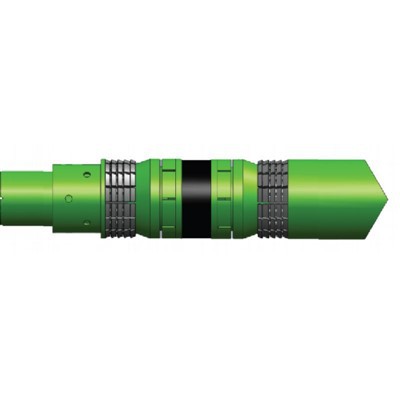
Product Introduction
The Hydro-Mechanical Set Bridge Plug is a critical downhole device designed to isolate specific sections of a wellbore, preventing fluid or gas communication between zones during well testing, stimulation, cementing, workover operations, or well abandonment. Unlike wireline-set bridge plugs that require dedicated wireline setting tools and pressure control equipment, our hydro-mechanical bridge plug is run on standard tubing and set by a dual-action mechanism - hydraulic tubing pressure initiates the setting process by actuating the hydraulic chamber, followed by mechanical tension applied through the work string to fully compress the packing element and set the slips - eliminating the need for complex external setting tools and ensuring a high-integrity seal even under extreme downhole pressures and temperatures. This tubing-conveyed, wireline-free deployment method is particularly advantageous in wells where wireline access is unavailable, cost-prohibitive, or unreliable - including highly deviated wells, offshore platforms without wireline units, and remote locations. Crafted with durable materials and a field-proven design, this tool integrates a hydraulic chamber to initiate the setting process, followed by mechanical tension to complete the seal - ensuring consistent and reliable performance in both standard and harsh well environments, including high-pressure/high-temperature (HPHT) wells. The 360-degree case-hardened slips provide secure anchoring against the casing wall, while the high-performance elastomeric packing element - available in Nitrile, HNBR, Aflas, or Viton formulations matched to wellbore temperature and fluid chemistry - creates a pressure-tight seal. Dual ratchet lock rings store and maintain the setting force, preserving seal integrity during pressure fluctuations and reversals. After setting and releasing the work string, the plug maintains a full tubing inner diameter, allowing unobstructed passage of wireline perforating guns, logging tools, and fluid circulation for subsequent operations - a key advantage over bridge plugs that restrict wellbore access after setting. The plug is available in two configurations: a permanent version constructed from cast iron and high-strength alloy that can be drilled out with PDC bits when isolation is no longer required, and a retrievable version that can be mechanically pulled and recovered for reuse or inspection. The hydro-mechanical setting tool itself is reusable across multiple runs, reducing per-well operational cost. Suitable for most casing grades including premium grades up to V-150, and available in a wide range of sizes from 3½" to 20", the plug can be deployed in various well types and seamlessly integrated with retrievable production packers or squeeze packers for combined completion operations. Whether for permanent well abandonment, temporary zonal isolation, multi-stage fracturing, workover maintenance, or squeeze cementing, the Hydro-Mechanical Set Bridge Plug delivers reliable, wireline-free zonal isolation with full bore access and cost-effective performance.
Product Features
1. Hydraulic-Mechanical Dual Setting Mechanism
Initiated by hydraulic tubing pressure and completed with mechanical tension, the setting process is smooth, efficient, and highly reliable - eliminating the need for wireline setting tools, wireline pressure control equipment (lubricators, grease injectors), and dedicated wireline crews, thereby reducing operational complexity, logistics, and costs. The tubing-conveyed deployment allows setting in wells where wireline access is unavailable or unreliable, including highly deviated wells, offshore platforms without wireline units, and remote locations. The dual-action mechanism ensures positive setting: hydraulic pressure initiates slip expansion and packing element compression, while mechanical tension confirms full set and lock ring engagement.
2. Superior Zonal Isolation with High Pressure Rating
Equipped with high-performance elastomeric packing elements (available in Nitrile, HNBR, Aflas, or Viton - selected based on wellbore temperature and fluid chemistry) and 360-degree case-hardened slips, the plug provides a tight, leak-proof seal that withstands high differential pressures from 5,000 to 48,000 PSI depending on plug size and casing configuration, and prevents fluid migration between well zones. The dual ratchet lock rings store and maintain setting force, preserving seal integrity during pressure reversals and dynamic downhole conditions. Standard temperature rating is 325°F (163°C), with custom elastomer options available up to 400°F (204°C). Note: The 48,000 PSI rating applies to specific small-size/high-pressure configurations - verify with engineering for your specific casing size and application.
3. Drillable or Retrievable Configurations
Constructed from cast iron or high-strength alloy for permanent applications, the bridge plug can be easily drilled out with PDC bits when retrieval is required, minimizing debris generation and reducing removal time and costs compared to non-drillable steel alternatives. For temporary isolation applications, retrievable models are available that can be mechanically pulled and recovered intact via the work string - eliminating drill-out entirely and allowing potential inspection and reuse. Both configurations share the same hydro-mechanical setting mechanism and full-bore design.
4. Versatile Compatibility with Wide Size Range
Suitable for most casing grades including premium grades up to V-150, and available in a wide range of sizes from 3½" to 20", the plug can be deployed in various well types - including vertical, deviated, and horizontal wells - and seamlessly integrated with retrievable production packers or squeeze packers for combined completion and workover operations. The standard 2-3/8" EUE thread connection ensures compatibility with most work strings, with custom thread options available for specialized applications.
5. Anti-Preset & Anti-Swab Protection
Features 360-degree slips and an angled backup ring design to prevent premature setting during deployment and swab-induced movement, ensuring precise placement at the target depth. The anti-preset mechanism holds the plug in the run-in position until hydraulic pressure is applied, and the anti-swab design prevents accidental setting caused by pressure surges during rapid tripping or swabbing operations. This ensures the plug reaches the intended setting depth reliably before activation.
6. Cost-Effective with Reusable Setting Tool
The hydraulic-mechanical setting tool is reusable multiple times across different wells, reducing per-well tool cost compared to single-use wireline setting tools. The plug's compact, slim-line design reduces run-in time and operational costs - ideal for both one-time abandonment and repeated well interventions. The full-bore design eliminates the need for additional trips to remove restrictions before subsequent operations.
7. Full Tubing Bore Access
After setting and releasing the work string, the plug maintains a full tubing inner diameter, allowing unobstructed passage of fluids, wireline perforating guns, logging tools, and other downhole equipment for subsequent operations - including post-setting well testing, production logging, and perforation. This full-bore access is a key advantage over bridge plugs with restricted internal diameters that require additional trips or equipment to access below the plug.
Working Principle
The Hydro-Mechanical Set Bridge Plug operates in four phases - tubing deployment, hydraulic initiation, mechanical setting, and isolation/retrieval:
Phase 1: Tubing Deployment
The plug is connected to the work string via the standard 2-3/8" EUE thread connection (or custom thread) and run into the wellbore to the target setting depth. The anti-preset mechanism holds the plug in the run-in position, with slips retracted and packing element uncompressed, allowing safe passage through deviated wellbores, restrictions, and casing irregularities without premature activation. The anti-swab design prevents accidental setting caused by pressure surges during tripping.
Phase 2: Hydraulic Initiation
Once on depth, hydraulic pressure is applied through the tubing work string. The pressure enters the plug's hydraulic chamber, initiating the setting process by driving the slip cone forward to expand the 360-degree case-hardened slips outward against the casing wall, and beginning compression of the elastomeric packing element. The hydraulic pressure also shears the anti-preset pins, releasing the setting mechanism.
Phase 3: Mechanical Tension Setting
After hydraulic initiation, mechanical tension is applied to the work string - pulling upward while the slips are anchored against the casing - to fully compress the packing element and complete the seal. The dual ratchet lock rings engage during this phase, mechanically storing and locking the setting force so that the seal is maintained even after the work string tension is released. Once the lock rings are fully engaged, the work string is rotated or released to disconnect from the plug, and the setting tool and work string are retrieved to surface.
Phase 4: Isolation and Subsequent Operations
Once set, the 360-degree slips and compressed packing element create a reliable pressure barrier containing differential pressure from either direction. The full tubing inner diameter is maintained, allowing wireline perforating, logging, and fluid circulation through the plug for subsequent operations. For permanent applications: when isolation is no longer required, the cast iron/alloy plug is drilled out with PDC bits on coiled tubing or drill pipe. For retrievable models: a retrieval tool is run on tubing to engage and mechanically pull the plug, releasing the slips and recovering the plug intact to surface.
Customization Capabilities
We offer comprehensive customization to match specific well conditions:
• Custom casing sizes beyond the standard 3½"–20" range
• Custom pressure ratings for specific sizes and applications
• Custom temperature ratings up to 400°F (204°C) with specialized elastomers
• Packing element material selection (Nitrile, HNBR, Aflas, Viton) based on downhole fluids
• Permanent (drillable) or retrievable configuration
• Custom thread connections beyond standard 2-3/8" EUE
• Integration with retrievable production packers or squeeze packers
• Custom slip material for special casing grades (including V-150 and premium grades)
• OEM branding and custom packaging
Lead time for custom orders: 15–30 working days depending on complexity; sample evaluation units available before bulk orders.
Quality Assurance
We adhere to strict quality control standards to ensure every Hydro-Mechanical Set Bridge Plug meets or exceeds industry requirements including API Spec 11D1 and ISO 14310. All products undergo rigorous testing to guarantee reliability and durability in the harshest downhole conditions.
Quality Control Process
• Raw Material Inspection: Cast iron, high-strength alloy, and elastomer materials sourced from approved suppliers with material test reports (MTR) verifying chemical composition, tensile strength, hardness, and temperature/pressure ratings. Elastomer packing elements tested for hardness, tensile strength, compression set, and fluid compatibility.
• In-Process Control: Precision machining with documented parameters; critical dimensions - slip tooth geometry, packing element groove dimensions, ratchet lock ring fit, hydraulic chamber pressure rating, and thread connection - inspected at first-article, in-process, and final stages.
• Finished Product Testing:
- Hydrostatic Pressure Seal Test: Each assembled plug tested at rated differential pressure with zero visible leakage
- Setting Function Test: Sample plugs set in test casing via hydraulic pressure + mechanical tension to verify slip expansion, packing element compression, and ratchet lock engagement
- Anti-Preset Test: Verified that plugs do not set below activation pressure
- Retrieval Test: Retrievable models tested for release and pull force
- Dimensional Inspection: 100% verification of critical dimensions and thread gauging
Warranty
12-month warranty from date of shipment against manufacturing defects, with 24-hour technical support for setting procedure, retrieval optimization, and troubleshooting.
Application Scenarios
1. Permanent Well Abandonment (P&A)
Provides long-term, high-integrity isolation for wells that are no longer in production, ensuring environmental safety and compliance with industry standards. The permanent cast iron version can be drilled out if future re-entry is required, and the wide size range (3½"–20") covers both production and surface casing abandonment. The hydro-mechanical setting method is particularly valuable for P&A operations on platforms without wireline capability.
2. Temporary Zonal Isolation
Isolates lower well zones during upper zone testing, cementing, stimulation, or production, preventing cross-contamination and ensuring accurate operation results. The retrievable configuration allows the plug to be mechanically pulled and recovered after the operation, eliminating drill-out costs. The full-bore design enables wireline logging and perforating through the plug while set, reducing trip time.
3. Multi-Stage Fracturing
Enables efficient isolation of fracturing zones, supporting multi-stage completion operations and optimizing hydrocarbon recovery. The hydro-mechanical setting on tubing allows rapid deployment between stages without wireline mobilization, and the full-bore access allows fracturing fluids and proppant to pass through the plug to lower zones after the upper stage is completed.
4. Well Workover & Maintenance
Facilitates safe workover operations by isolating specific well sections, reducing risks and improving operational efficiency. The tubing-conveyed deployment is ideal for workover rigs that may not have wireline units, and the anti-preset/anti-swab design ensures reliable setting during workover operations with frequent pressure fluctuations.
5. Squeeze Cementing
Works in tandem with squeeze packers to ensure effective cement placement and zonal isolation in damaged or non-uniform wellbores. The hydro-mechanical bridge plug provides a reliable lower barrier below the squeeze interval, and the full-bore design allows cement placement through the work string. The plug can be integrated with retrievable production packers for combined squeeze cementing and isolation operations.
FAQ
Q: What is the difference between hydro-mechanical set and wireline set bridge plugs?
A: A hydro-mechanical set bridge plug is run on tubing and set by applying hydraulic pressure through the tubing followed by mechanical tension - it does not require wireline setting tools, wireline pressure control equipment, or dedicated wireline crews. This makes it ideal for wells where wireline is unavailable, cost-prohibitive, or unreliable (highly deviated wells, remote locations, platforms without wireline units). A wireline set bridge plug is deployed and set using slickline or e-line with a dedicated wireline setting tool - it is faster for single runs but requires wireline equipment and personnel. Both are available in permanent (drillable) and retrievable configurations.
Q: Does the hydro-mechanical set bridge plug require a wireline unit?
A: No. The plug is run entirely on standard tubing and set by hydraulic pressure plus mechanical tension - no wireline equipment, lubricator, grease injector, or wireline crew is required. This is the primary advantage of the hydro-mechanical design. The setting tool is part of the work string assembly and is retrieved with the tubing after setting.
Q: What does "full tubing bore access" mean?
A: After the plug is set and the work string is released and retrieved, the plug maintains a full inner diameter equal to the tubing ID. This means wireline perforating guns, logging tools, and fluid circulation can pass through the plug unobstructed for subsequent operations - unlike some bridge plugs that have a restricted or closed internal diameter after setting, requiring additional trips to access below the plug.
Q: Can the plug be retrieved after setting?
A: It depends on the configuration. Retrievable models can be mechanically pulled and recovered intact via a retrieval tool run on tubing - no drill-out required. Permanent (drillable) models are constructed from cast iron/high-strength alloy and are milled out with PDC bits when no longer needed. Both configurations are available - specify your requirement when ordering.
Q: What is the delivery time, MOQ, and payment method?
A: The MOQ is 1 piece for standard models. Standard products ship within 7–15 working days after deposit; custom sizes or configurations require 15–30 working days. We ship from Shanghai or Ningbo port. Payment terms include T/T (30% deposit, 70% before shipment), L/C at sight, and Western Union. Sample evaluation units available.
Q: Is the 48,000 PSI pressure rating available for all sizes?
A: No. The maximum differential pressure rating varies by plug size and casing configuration - the range is 5,000 to 48,000 PSI. The highest ratings (48,000 PSI) apply to specific small-size, high-pressure configurations. Larger sizes typically have lower maximum pressure ratings. Contact our engineering team with your casing size and required pressure for a specific rating confirmation and plug selection.
Hot Tags: Hydro-Mechanical Set Bridge Plug | API 11D1 | ISO 14310 | Hydraulic + Mechanical Setting | Full Bore | Drillable or Retrievable, China Hydro-Mechanical Set Bridge Plug | API 11D1 | ISO 14310 | Hydraulic + Mechanical Setting | Full Bore | Drillable or Retrievable manufacturers, suppliers, factory, Tubing Hanger Plug, Series Composite Bridge Plug, Double Slip Soluble Bridge Plug, Composite Plug, Liner Wiper Plug, Composite Frac Plug
| Item | Specification | Remarks |
|---|---|---|
| Product Type | Hydro-Mechanical Set Bridge Plug | Permanent (drillable) / Retrievable optional |
| Setting Method | Hydraulic Actuation (tubing pressure) + Mechanical Tension | No wireline setting tools required |
| Setting Tool | Reusable hydro-mechanical setting tool (part of work string) | Retrieved after setting |
| Casing Setting Range | 3½" – 20" (88.9mm – 508.0mm) | Custom sizes available |
| Max Differential Pressure | 5,000 – 48,000 PSI (34.5 – 331 MPa) | Varies by size; 48K for specific small-size HP models |
| Temperature Rating | Standard: 325°F (163°C); Custom: Up to 400°F (204°C) | Elastomer dependent |
| Shear Force | 9,000 – 30,000 lbs | Varies by model/size |
| Packing Element Material | Nitrile, HNBR, Aflas, Viton | Selected by well temp/fluid |
| Construction Material | Cast Iron (permanent drillable); High-Strength Alloy (retrievable) | Case-hardened slips |
| Slip Type | 360-degree full-circle case-hardened slips | Secure casing anchoring |
| Lock Ring | Dual Ratchet Lock Rings | Stores/maintains setting force; pressure reversal resistant |
| Anti-Preset | Shear pin + angled backup ring design | Prevents premature setting |
| Anti-Swab | Pressure surge resistant design | Prevents swab-induced setting |
| Thread Connection | 2-3/8" EUE (Standard); Custom threads available | - |
| Full Bore After Setting | Yes - maintains full tubing ID | Allows wireline/logging/perforating passage |
| Retrieval Method | Drill-Out with PDC bit (Permanent); Mechanical Pull (Retrievable) | - |
| Casing Grade Compatibility | Most grades including premium up to V-150 | - |
| Compatibility | Retrievable production packers; squeeze packers | Integrated completion |
| Application | P&A abandonment, temporary isolation, multi-stage fracturing, workover, squeeze cementing | - |
| Standard / Certification | API Spec 11D1, ISO 14310, ISO 9001:2015 | CE, BV/SGS/DNV on request |
| MOQ | 1 piece (standard); custom MOQ on request | - |
| Delivery Time | 7 – 15 working days (standard); 15 – 30 working days (custom) | - |
| Packaging | Individual plastic tube + export wooden crate | - |
| Casing Size | Casing OD | Typical Pressure Range | Configuration |
|---|---|---|---|
| 3½" (88.9mm) | 88.9mm | 10,000 – 48,000 PSI | Permanent / Retrievable |
| 4½" (114.3mm) | 114.3mm | 10,000 – 30,000 PSI | Permanent / Retrievable |
| 5" (127.0mm) | 127.0mm | 10,000 – 20,000 PSI | Permanent / Retrievable |
| 5½" (139.7mm) | 139.7mm | 10,000 – 15,000 PSI | Permanent / Retrievable |
| 7" (177.8mm) | 177.8mm | 5,000 – 10,000 PSI | Permanent / Retrievable |
| 9-5/8" (244.5mm) | 244.5mm | 5,000 – 10,000 PSI | Permanent / Retrievable |
| 13-3/8" (339.7mm) | 339.7mm | 5,000 PSI | Permanent / Retrievable |
| 20" (508.0mm) | 508.0mm | 5,000 PSI | Permanent / Retrievable |