

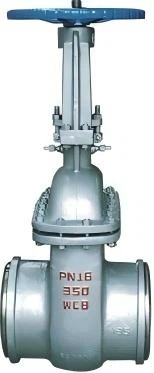
Product Introduction
The Water-sealing Gate Valve is a specialized shut-off valve with a unique water-circulation sealing stuffing box. Injecting 0.6–1.0 MPa water into the seal interface achieves complete atmosphere isolation with zero leakage even under high-pressure or vacuum conditions - ideal for turbine vacuum condensing systems. The flat-bottom chamber without gate grooves prevents debris accumulation and reduces flow resistance, while non-toxic epoxy coating (inside/outside) meets drinking water requirements. The rubber-wrapped wedge with embedded copper nut ensures durable, low-maintenance operation. DN15–DN800 (to DN2000 custom), PN16–PN160, -29°C~429°C, carbon/cast iron/stainless/alloy steel, per GB/T 12234, EN 1074-2, DIN 3352, BS5163.
Product Features
1. Water-Circulation Sealing for Positive & Vacuum Service: Equipped with a water-circulated sealing stuffing box and high-performance sealing components, the valve achieves tight sealing in both positive-pressure and vacuum (negative-pressure) systems. Clean water at 0.6–1.0 MPa is injected into the stem-bonnet interface to create a positive-pressure water barrier that completely isolates the pipeline medium from the atmosphere - preventing air ingress in vacuum condensing systems and medium leakage in pressurized service. Optional triple O-shaped sealing rings provide redundant reliability.
2. Pressure-Free O-Ring Maintenance: The unique water-seal design allows replacement of O-rings without shutting down the water seal supply or depressurizing the pipeline, significantly reducing maintenance downtime and operational disruption. This is a critical advantage for continuous-process plants such as power stations and petrochemical facilities where unplanned shutdowns carry high economic costs. The O-ring access is designed for quick, tool-friendly replacement by maintenance personnel.
3. Flat-Bottom Debris-Free & Low Resistance: Adopting a flat-bottom valve chamber design without gate grooves, the valve prevents accumulation of sand, stones, sediment, and other debris at the bottom of the body - a common problem with conventional gate valves that have recessed gate pockets. This ensures unobstructed fluid flow, minimizes pressure loss, and prevents debris from interfering with gate seating. The design also makes valve operation lighter and more flexible, improving operational efficiency and reducing actuator torque requirements.
4. Non-Toxic Epoxy Coating for Potable Water: The valve body is treated with non-toxic epoxy resin electrostatic spraying on both inside and outside surfaces, preventing rust water formation and medium pollution, and meeting the hygienic requirements for direct drinking water (potable water) systems per EN 1074-2. The valve stem, stem nut, and sealing sleeve are made of corrosion-resistant materials such as stainless steel and copper alloy, ensuring long-term use in corrosive media environments and extending service life in water treatment and municipal applications.
5. Durable Rubber-Wrapped Wedge & Embedded Copper Nut: The valve plate (wedge) is fully wrapped with high-quality rubber through advanced vulcanization technology, ensuring precise geometric dimensions, firm bonding between rubber and metal substrate, and excellent elastic memory for repeated tight shutoff. The embedded copper nut design integrates the nut and valve plate into a single unit, avoiding loosening or falling off under thermal cycling and vibration. With fewer moving parts and robust construction, the valve requires minimal maintenance and delivers long service life.
6. Wide Range, Multiple Drives & Global Standards: Available in sizes DN15–DN800 (customizable up to DN2000), pressure ratings PN16–PN160, and temperatures from -29°C to 429°C, with body materials including carbon steel (WCB), cast iron, stainless steel, and alloy steel to meet diverse industrial scenarios. Operation modes include manual handwheel, electric actuator, and pneumatic actuator for remote and automated control. Designed and manufactured per GB/T 12234-2007, JB/T 9092, EN 1074-2, DIN 3352, and BS5163, with flanged (RF) or butt-weld end connections for global pipeline compatibility.
Working Principle
The Water-sealing Gate Valve operates on the wedge gate principle with an added water-circulation seal in the stuffing box. Rotating the handwheel lifts the rubber-wrapped wedge: open, it retracts above the flat-bottom bore for unobstructed flow; closing, it seats tightly. The water-seal injects 0.6–1.0 MPa water into the stem-bonnet interface, creating a pressure barrier that isolates medium from atmosphere - preventing air ingress in vacuum and leakage in positive pressure. Optional triple O-rings give redundant sealing and allow pressure-free replacement.
Application Scenarios
Thermal Power Plants: Ideal for vacuum condensing systems of steam turbines, used to cut off or connect media such as water, steam, and oil under high temperature and pressure conditions. The water-seal structure prevents air infiltration into the vacuum system, maintaining condenser vacuum efficiency and turbine performance - a critical requirement for power plant reliability and heat rate.
Petrochemical Industry: Suitable for pipelines requiring strict isolation from the atmosphere, used in flow regulation and pressure control of corrosive or high-temperature media such as oil and chemicals. The water-circulation seal ensures zero toxic or flammable medium leakage to the environment, enhancing plant safety and environmental compliance in refineries and chemical processing facilities.
Water Treatment & Municipal Engineering: Applied in tap water supply, sewage treatment, and irrigation systems, meeting the requirements for non-toxic and rust-free operation. The internal and external epoxy resin coating prevents medium pollution and is certified for potable water service, making it suitable for drinking water distribution networks, reservoirs, and water treatment plant isolation.
General Industrial Pipelines: Used in metallurgy, light textile, food, medicine, shipbuilding, and energy systems as a shut-off or regulating device for fluid pipelines. The flat-bottom debris-free design and corrosion-resistant construction provide reliable service in a wide range of general industrial applications where conventional gate valves suffer from sediment buildup and premature wear.
Vacuum & Negative-Pressure Systems: With its specialized vacuum sealing structure and water-circulation barrier, it is uniquely suitable for negative-pressure pipelines that require strict airtightness, effectively isolating the system from the atmosphere and preventing air ingress that would degrade vacuum performance. Essential for condenser vacuum lines, vacuum distillation, and other process vacuum applications.
Quality Assurance
Every Water-sealing Gate Valve is manufactured and tested per GB/T 12234, EN 1074-2, DIN 3352, BS5163, ISO 9001. Raw materials are MTR-verified by heat number with chemical/mechanical tests. Each valve undergoes dimensional inspection, shell test at 1.5×, seat test at 1.1× per JB/T 9092/GB/T 13927, plus water-seal test at 0.6–1.0 MPa. Epoxy coating is tested for adhesion and potable-water compliance; rubber wedges undergo bond testing. NDT includes MT/PT on castings and welds. Units ship with serialized MTR, test cert, 18-month warranty, BV/SGS/TUV on request.
FAQ
Q1: What is a water-sealing gate valve and how does the water seal work?
A: A water-sealing gate valve is a specialized wedge gate valve with an additional water-circulation sealing system built into the stuffing box (the area where the valve stem passes through the bonnet). Clean water is continuously injected at 0.6–1.0 MPa into the annular space between the stem and bonnet, creating a positive-pressure water barrier that physically separates the pipeline medium from the outside atmosphere. This water barrier prevents two critical failure modes: (1) in vacuum/negative-pressure systems, it stops air from leaking INTO the pipeline, which would destroy vacuum; (2) in positive-pressure systems, it stops process medium from leaking OUT to the environment. The water seal works in conjunction with O-rings and packing for redundant, zero-leakage performance.
Q2: What water pressure and quality are required for the water-seal system?
A: The water-seal system requires a clean water supply at a pressure of 0.6–1.0 MPa (approximately 6–10 bar), which must be higher than the pipeline operating pressure to ensure a positive pressure differential. The water should be clean, filtered (typically 100 mesh or finer), and free of suspended solids that could clog the injection ports or damage O-rings. For potable water applications, the seal water should meet drinking water quality standards. A pressure regulating valve and filter should be installed at the water supply inlet to maintain stable pressure and protect the seal system. The water consumption is minimal as it is primarily a static pressure barrier, not a continuous high-flow flush.
Q3: Can this valve be used in vacuum or negative-pressure systems?
A: Yes - this is one of the primary design purposes of the water-sealing gate valve. Conventional gate valves rely on packing alone to seal the stem, and under vacuum conditions air can leak inward through the packing, degrading or destroying system vacuum. The water-circulation seal creates a positive-pressure water barrier at the stem that completely prevents atmospheric air ingress, making it suitable for full vacuum service down to absolute pressures as low as the system design allows. It is widely used in steam turbine condenser vacuum systems, vacuum distillation columns, and other process vacuum applications where maintaining tight vacuum is critical to process efficiency and product quality.
Q4: Is the water-sealing gate valve suitable for drinking water (potable water) systems?
A: Yes. The valve body is coated inside and outside with non-toxic epoxy resin via electrostatic spraying, which prevents rust formation and water contamination, and meets the hygienic requirements for potable water systems per EN 1074-2 and similar drinking water standards. Internal components in contact with water (stem, stem nut, sealing sleeve) use corrosion-resistant stainless steel and copper alloy materials that do not leach harmful substances. For food-grade or pharmaceutical applications, please specify the requirement at ordering so we can configure appropriate materials, surface finishes, and certification documentation. Standard carbon steel models with epoxy coating are suitable for municipal drinking water distribution.
Q5: How is maintenance performed, and can O-rings be replaced without shutdown?
A: Routine maintenance includes periodic inspection of the water-seal supply pressure and flow, checking for external leaks at the stuffing box, and operational cycling to prevent seat seizure. The key maintenance advantage of this design is that O-rings can be replaced WITHOUT shutting down the water seal supply or depressurizing the pipeline - the water barrier remains active while the O-ring access is serviced, making it ideal for continuous-process plants. Major overhauls (wedge replacement, seat reconditioning) require valve removal from service. Under normal conditions with proper water-seal maintenance, these valves achieve 15–20+ years of reliable service with minimal intervention.
Hot Tags: Water-sealing Gate Valve | Vacuum System | DN15–DN800, China Water-sealing Gate Valve | Vacuum System | DN15–DN800 manufacturers, suppliers, factory, direct buried gate valve, 100 mm sluice valve, brass gate valve 3 4, 3 inch pvc gate valve, ball valve and check valve, vacuum gate valve
| Item | Specification |
|---|---|
| Product Name | Water-sealing Gate Valve (Water-sealed Gate Valve) |
| Valve Type | Wedge Gate Valve with Water-Circulation Sealing Stuffing Box |
| Nominal Diameter | DN15–DN800 (NPS 1/2"–32"), customizable up to DN2000 |
| Nominal Pressure | PN16–PN160 (1.6 MPa–10.0 MPa) |
| Working Temperature | -29°C ~ 429°C (depending on material and seal) |
| Water-Seal Injection Pressure | 0.6–1.0 MPa (clean filtered water, pressure > pipeline pressure) |
| Applicable Medium | Water, Steam, Oil, Non-corrosive Gas, Sewage, Potable Water, Vacuum Service |
| Body Material | Carbon Steel (ASTM A216 WCB), Cast Iron, Stainless Steel, Alloy Steel |
| Seal Material | High-quality Rubber (EPDM/NBR), PTFE, Stainless Steel, Triple O-ring (optional) |
| Valve Stem / Nut Material | Stainless Steel, Copper Alloy (embedded nut design) |
| Body Coating | Non-toxic epoxy resin electrostatic spraying (inside & outside), potable-water compliant |
| End Connection | Flanged (RF), Butt Weld (BW), Customizable |
| Operation Mode | Manual Handwheel, Electric Actuator, Pneumatic Actuator |
| Design Standard | GB/T 12234-2007, JB/T 9092, EN 1074-2, DIN 3352, BS5163 |
| Test Standard | JB/T 9092, GB/T 13927 (shell 1.5×, seat 1.1×, water-seal function test) |


