

Titanium castings are highly valued in various industries due to their exceptional properties such as high strength-to-weight ratio, excellent corrosion resistance, and good biocompatibility. As a leading supplier of titanium castings, I often encounter questions about the different joining methods for these components. In this blog post, I will explore the various techniques available for joining titanium castings, their advantages, limitations, and applications.
1. Welding
Welding is one of the most common methods used to join titanium castings. It involves melting the base metals at the joint and allowing them to solidify, creating a strong bond. There are several welding processes suitable for titanium, each with its own characteristics.
Gas Tungsten Arc Welding (GTAW)
GTAW, also known as TIG (Tungsten Inert Gas) welding, is a popular choice for joining titanium castings. In this process, an electric arc is established between a non - consumable tungsten electrode and the workpiece. An inert gas, typically argon, is used to shield the weld area from atmospheric contamination.
Advantages:
- High - quality welds with excellent mechanical properties can be achieved.
- Precise control over the heat input, which is crucial for titanium to prevent excessive grain growth and maintain its properties.
- Suitable for thin - walled titanium castings.
Limitations:
- Slow welding speed, which may not be suitable for large - scale production.
- Requires skilled operators to ensure proper shielding and welding parameters.
Gas Metal Arc Welding (GMAW)
GMAW, or MIG (Metal Inert Gas) welding, uses a consumable wire electrode to create the weld. An inert gas is also used to protect the weld pool from oxidation.
Advantages:

- Higher welding speed compared to GTAW, making it more suitable for mass production.
- Can be automated, which increases productivity and reduces labor costs.
Limitations:
- More difficult to control the heat input accurately, which can lead to problems such as distortion and porosity in titanium castings.
- The quality of the weld may be slightly lower than that of GTAW.
Electron Beam Welding (EBW)
EBW is a high - energy welding process that uses a focused beam of electrons to melt the base metals. The process is carried out in a vacuum to prevent oxidation.
Advantages:
- Deep penetration welding can be achieved, allowing for the joining of thick - section titanium castings.
- Minimal heat - affected zone, which helps to preserve the properties of the titanium.
- High precision and repeatability.
Limitations:
- Expensive equipment and the need for a vacuum chamber, which increases the cost of the welding process.
- Limited to the size of the vacuum chamber, which may restrict the size of the parts that can be welded.
2. Brazing
Brazing is a joining process in which a filler metal with a melting point lower than that of the base metals is heated above its melting point and distributed between the faying surfaces of the parts to be joined by capillary action.
Advantages:
- Can join dissimilar materials, including titanium castings to other metals or ceramics.
- Low heat input compared to welding, which reduces the risk of distortion and changes in the microstructure of the titanium.
- Suitable for joining complex - shaped titanium castings.
Limitations:
- The joint strength is generally lower than that of welded joints.
- The filler metal may have different corrosion resistance properties compared to the titanium castings, which can affect the overall performance of the joint in corrosive environments.
3. Mechanical Fastening
Mechanical fastening involves using bolts, nuts, screws, or rivets to join titanium castings. This method is simple and does not require any special equipment for the joining process.
Advantages:
- Easy to disassemble and reassemble, which is useful for maintenance and repair.
- Can be used to join parts with different thicknesses and shapes.
- Does not require any heat input, so there is no risk of changing the properties of the titanium due to heat.
Limitations:
- The joint may have some clearance, which can lead to vibration and noise in some applications.
- Additional weight is added to the assembly due to the fasteners.
If you are looking for high - quality Titanium Fasteners, we can provide a wide range of options to meet your specific requirements.
4. Adhesive Bonding
Adhesive bonding uses an adhesive to join the surfaces of the titanium castings. The adhesive forms a bond between the parts by chemical or physical means.
Advantages:
- Can distribute stress evenly over the joint area, which is beneficial for parts under dynamic loading.
- Can seal the joint, preventing the ingress of moisture and other contaminants.
- Suitable for joining parts with large surface areas.
Limitations:
- The adhesive may degrade over time due to environmental factors such as temperature, humidity, and chemical exposure.
- Surface preparation is critical for a strong bond, and any contamination on the surfaces can significantly reduce the joint strength.
Applications of Different Joining Methods
The choice of joining method depends on several factors, including the application requirements, the design of the parts, and the production volume.
- Aerospace Industry: In the aerospace industry, where weight and strength are critical, welding methods such as EBW and GTAW are often used for joining titanium castings. These methods can provide high - strength joints with minimal weight addition. Titanium Transition Reducers used in aerospace systems may be joined using these techniques.
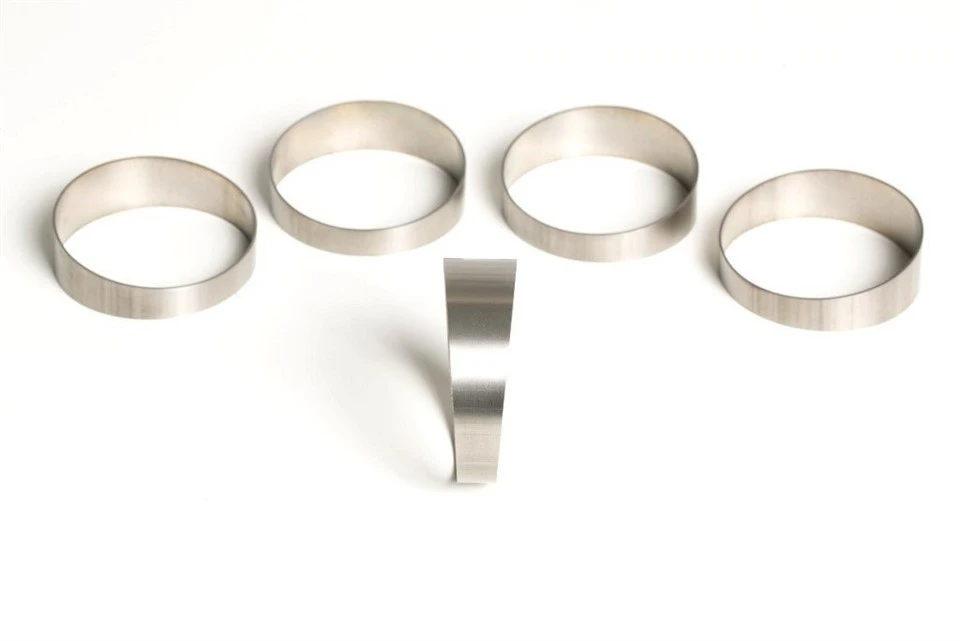
- Medical Industry: Due to the biocompatibility requirements, welding and brazing are carefully selected in the medical industry. Adhesive bonding and mechanical fastening may also be used in some applications where disassembly is required. Titanium Pie Cuts used in medical implants may be joined using appropriate methods to ensure the safety and functionality of the devices.
- Chemical Processing Industry: In the chemical processing industry, where corrosion resistance is crucial, welding and brazing are commonly used to ensure a leak - tight joint. Adhesive bonding may also be used in some non - critical applications.
Conclusion
Each joining method for titanium castings has its own advantages and limitations. As a titanium castings supplier, we understand the importance of choosing the right joining method for your specific application. Whether you need a high - strength weld for an aerospace component or a simple mechanical fastening for a non - critical assembly, we can provide the necessary expertise and products to meet your needs.
If you are interested in our titanium castings and would like to discuss the best joining methods for your project, please feel free to contact us. We are committed to providing high - quality products and excellent service to our customers.
References
-ASM Handbook, Volume 6: Welding, Brazing, and Soldering.
-Schwartz, M. M. (1997). Welding of Aluminum and Its Alloys. ASM International.
-Metal Handbook Desk Edition, 3rd Edition. ASM International.