Product Introduction
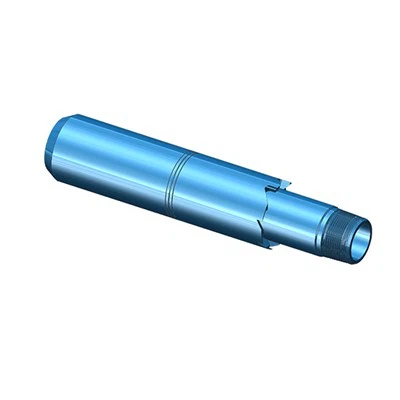
The Circulation Valve is a downhole fluid control tool specifically designed to regulate the circulation of drilling mud, cement slurry, or completion fluids in oil and gas wells. It is primarily used in drilling, cementing, remedial cementing, well cleanout, and well intervention projects, where controlled fluid circulation is critical to maintaining wellbore stability, removing debris, and ensuring operational safety. Our Circulation Valve is available in two main activation types: mechanical activation (rotational/axial force) and hydraulic activation (downhole pressure control), catering to different well conditions and operational requirements. Deployed via drill pipe or coiled tubing, it can be opened, closed, or adjusted at the target depth to enable fluid circulation, relieve excessive downhole pressure, or isolate specific wellbore sections. With a heavy-duty construction, high temperature and pressure resistance, and excellent corrosion resistance, it performs reliably in vertical, deviated, horizontal, and deep wells, making it an indispensable tool for modern oilfield operations.
Product Features
1.Flexible Activation Modes : Available in mechanical (rotational/axial) and hydraulic activation options to suit diverse operational scenarios. The mechanical model is activated by applying rotational or axial force from the surface, ensuring precise control even in wells with unstable downhole pressure. The hydraulic model is triggered by downhole pressure changes, enabling remote activation without requiring drill pipe rotation, ideal for horizontal wells or complex wellbore trajectories. Both models support multiple open/close cycles for repeated circulation needs.
2.Superior Sealing Performance : Equipped with a precision-machined valve core and high-elasticity sealing elements (HNBR/Viton elastomer), the valve forms a tight, pressure-tight seal when closed, preventing fluid leakage and ensuring reliable isolation. The double-layer backup ring design enhances sealing stability, enabling the valve to withstand differential pressures up to 15,000 psi (103.4 MPa) without seal failure. The sealing elements are resistant to high temperatures, corrosion, and wear, extending the tool's service life in harsh downhole environments.
3.High Temperature & Pressure Resistance : Engineered to operate in extreme downhole conditions, with a maximum temperature rating of 482°F (250°C) and maximum pressure rating of 15,000 psi. The valve body is made of high-strength alloy steel (AISI 4140/4130) with heat treatment, ensuring structural integrity and resistance to deformation under high pressure and temperature. It maintains stable performance in deep wells, high-salinity formations, and corrosive media (H2S/CO2), reducing maintenance frequency and operational risks.
4.Precise Fluid Control & Circulation Efficiency : The valve core features a full-port design, minimizing fluid flow resistance and ensuring high circulation efficiency. It can be adjusted to control flow rate, enabling targeted wellbore cleaning, debris removal, and pressure relief. When opened, the valve provides unobstructed fluid passage, allowing for efficient circulation of drilling mud or cement slurry; when closed, it forms a reliable barrier to isolate wellbore sections, preventing cross-contamination or pressure loss.
5.Wide Compatibility & Versatility : Compatible with standard API drill pipe (2 3/8" to 5 1/2"), coiled tubing (2" to 4 1/2"), and completion tools, requiring no special adapters for connection. Available in casing sizes from 4 1/2" to 18 5/8", covering most common oilfield well specifications. It can be used in conjunction with bridge plugs, cement retainers, and other downhole tools, adapting to multiple operational needs such as well cleanout, cementing, well stimulation, and pressure testing.
6.Durable & Drillable Design : The valve body is constructed with high-quality alloy steel and cast iron components, ensuring durability and resistance to impact and vibration during deployment and operation. For permanent well operations, we offer drillable models that can be easily drilled out using standard PDC bits or roller cone bits after completion, leaving no residual components in the wellbore and avoiding interference with subsequent production.
7.Easy Operation & Low Maintenance : The activation process is simple and intuitive, requiring only standard drilling equipment and no special tools. The valve's robust structure and precision manufacturing reduce the risk of mechanical failure, minimizing maintenance needs and downtime. Each valve is pre-tested before delivery to ensure operational reliability, and detailed operation guidelines are provided for on-site use.
Installation & Operation Guidelines
To ensure the safe and efficient operation of the Circulation Valve, please follow the following installation and operation guidelines (a detailed operation manual will be provided with each product) :
- Pre-Installation Inspection : Check the valve for damage, corrosion, or missing components (valve core, sealing elements, spring, piston, etc.). Verify that the valve specifications (size, pressure/temperature rating, activation type) match the well conditions and operational requirements. Test the valve's open/close function and sealing performance before assembly.
- Tool Assembly : Connect the Circulation Valve to the drill pipe/coiled tubing and other downhole tools according to the assembly diagram. Ensure all thread connections are tight and secure, and apply thread compound to prevent fluid leakage and thread damage. For hydraulic models, check the hydraulic lines and piston for blockages or damage.
- Deployment : Lower the assembled tool into the wellbore at a steady speed, avoiding rapid lowering to prevent impact damage to the valve. Monitor the depth in real time to ensure accurate positioning at the target depth. For mechanical models, avoid rotating the drill pipe during deployment to prevent accidental activation.
- Activation & Circulation :
Mechanical Model: Apply the specified rotational/axial force to open the valve, then start fluid circulation. Monitor the flow rate and pressure to ensure optimal circulation efficiency.
Hydraulic Model: Increase the surface fluid pressure to the preset activation pressure to open the valve. Maintain the pressure during circulation to keep the valve open.
- Deactivation :
Mechanical Model: Apply reverse rotational/axial force to close the valve, ensuring the valve core is fully seated and the seal is tight.
Hydraulic Model: Reduce the surface pressure below the activation threshold to allow the internal spring to reset the valve core and close the valve.
- Post-Operation Handling:
Retrievable Model: Retrieve the valve together with the drill pipe/coiled tubing, clean and inspect the valve for reuse.
Drillable Model: After the operation is completed and the cement is fully cured, drill out the valve using standard PDC bits or roller cone bits, and clean the wellbore thoroughly.
- Maintenance : After retrieval, clean the valve thoroughly, inspect the sealing elements and mechanical components for wear or damage, and replace any worn parts. Store the valve in a dry, clean environment to prevent corrosion.
Application Scenarios
- Drilling Operations : Used to circulate drilling mud during drilling, removing cuttings and debris from the wellbore, cooling the drill bit, and maintaining wellbore stability. It can also relieve excessive downhole pressure to prevent blowouts, ensuring safe drilling operations in high-pressure formations.
- Cementing Operations : Enables circulation of cement slurry during primary and remedial cementing, ensuring uniform cement distribution and improving cement bond quality. It can be used to flush the wellbore before cementing, removing mud cake and debris to enhance the sealing effect between cement and casing.
- Well Cleanout & Debris Removal : Ideal for well cleanout operations, circulating fluid to remove sand, scale, and other debris from the wellbore, restoring wellbore integrity and ensuring smooth subsequent operations (e.g., completion, production).
- Well Intervention & Stimulation : Used in well stimulation operations (e.g., fracturing, acidizing) to circulate stimulation fluids, control fluid flow, and isolate target zones. It can also be used to relieve pressure during intervention operations, ensuring operational safety.
- Deep Wells & High-Pressure Wells : Specifically designed for deep wells and high-pressure/high-temperature (HPHT) wells, with excellent temperature and pressure resistance, ensuring stable performance in extreme downhole conditions.
- Horizontal & Deviated Wells : The hydraulic activation model is particularly suitable for horizontal and deviated wells, enabling remote activation without drill pipe rotation, adapting to complex wellbore trajectories.
- Well Abandonment : Used in well abandonment operations to circulate cement slurry and form reliable barriers, isolating the wellbore from the surrounding formation to prevent environmental pollution.
FAQ
Q: What is the difference between Mechanical and Hydraulic Circulation Valves?
A: The core difference lies in the activation method. Mechanical Circulation Valves are activated by applying rotational or axial force from the surface, offering precise control and suitability for wells with unstable downhole pressure. They do not rely on fluid pressure, making them ideal for low-pressure wells or operations where pressure control is challenging. Hydraulic Circulation Valves are activated by downhole pressure changes, enabling remote activation without drill pipe rotation, which is perfect for horizontal, deviated, or deep wells where drill pipe manipulation is difficult. Both models offer reliable performance, and we can recommend the most suitable type based on your well conditions.
Q: Can the Circulation Valve be reused?
A: Yes, our retrievable Circulation Valves are designed for multiple uses. After retrieval, the valve can be cleaned, inspected, and maintained (e.g., replacing sealing elements) to ensure optimal performance for subsequent operations. The service life of a retrievable valve depends on downhole conditions (temperature, pressure, corrosion) and maintenance; under normal working conditions, it can be reused 3-5 times. We also offer drillable models for permanent operations, which are drilled out after use and not reused.
Q: What casing sizes is the Circulation Valve compatible with?
A: Our standard models are compatible with casing sizes from 4 1/2" to 18 5/8", covering most common oilfield well specifications. We also provide custom sizes to match non-standard casing sizes or special well conditions. The valve is compatible with standard API drill pipe and coiled tubing, requiring no special adapters for connection.
Q: How to ensure the sealing performance of the Circulation Valve in high-pressure environments?
A: We use precision-machined valve cores and high-elasticity HNBR/Viton sealing elements, combined with double-layer backup rings, to enhance sealing reliability. The valve undergoes strict pressure testing (1.5 times the maximum pressure rating) before delivery to ensure no leakage. Additionally, the valve body is made of high-strength alloy steel with heat treatment, ensuring structural integrity under high pressure. During operation, you can perform on-site pressure testing to verify the sealing performance before circulation.
Q: Can the Circulation Valve be used in H2S/CO2 corrosive wells?
A: Yes, we offer H2S/CO2 resistant versions of the Circulation Valve. These models use corrosion-resistant alloy steel (e.g., Inconel) for the valve body and special elastomers resistant to corrosive media, ensuring stable performance in sour gas wells or corrosive formations. Please specify your well's H2S/CO2 content when placing an order, and we will customize the valve to meet your requirements.
Q: How long does it take to drill out the drillable Circulation Valve?
A: The drill-out time depends on the valve size, material, and drilling equipment. For standard casing sizes (4 1/2" to 8 5/8"), the drill-out process can be completed in 15-30 minutes using a PDC bit. For larger casing sizes (10 3/4" to 18 5/8"), the drill-out time may be 30-60 minutes. The cast iron and alloy steel construction ensures easy and fast drill-out, saving rig time and operational costs.
Q: What is the maximum temperature and pressure the Circulation Valve can withstand?
A: Our standard Circulation Valve can withstand a maximum temperature of 482°F (250°C) and a maximum pressure of 15,000 psi (103.4 MPa). For ultra-high temperature and pressure (HPHT) wells (e.g., temperature above 482°F, pressure above 15,000 psi), we can customize the valve with high-temperature resistant materials and enhanced pressure-bearing structures to meet your specific needs.
Q: Do you provide technical support and after-sales service?
A: Yes, we provide comprehensive technical support and after-sales service. Each product is accompanied by a detailed operation manual, quality inspection report, and installation guide. Our professional technical team can provide on-site installation guidance, operational training, and troubleshooting support. If you encounter any problems (e.g., valve stuck, leakage, activation failure), we will respond within 24 hours to provide solutions. We also offer maintenance guidance for retrievable models to extend their service life.
Q: Can the Circulation Valve be used in horizontal and deviated wells?
A: Yes, our Hydraulic Circulation Valve is specifically designed for horizontal and deviated wells (deviation angle up to 90°). It can be activated remotely via downhole pressure, eliminating the need for drill pipe rotation, which is critical for complex wellbore trajectories. The mechanical model can also be used in deviated wells, but the hydraulic model is more recommended for horizontal wells due to its easier activation and better adaptability.
Q: What is the flow rate capacity of the Circulation Valve?
A: The flow rate capacity depends on the valve size and port design. Our full-port Circulation Valves offer minimal flow resistance, with flow rates ranging from 50 to 500 GPM (gallons per minute) depending on the casing size. For example, a 5 1/2" valve can handle a maximum flow rate of 250-300 GPM, while an 8 5/8" valve can handle up to 400-500 GPM. We can customize the port size to meet your specific flow rate requirements.
Hot Tags: circulation valve, China circulation valve manufacturers, suppliers, factory, Tubing Anchor Catcher, Wireline Set Cement Retainer, Liner Pipe, Equalizing Check Valve, Pump Out Plug, Wireline Setting Tools
|
Casing Size (in) |
Tool OD (in) |
Minimum ID (in) |
Maximum Pressure Rating (psi/bar) |
Maximum Temperature Rating (°F/°C) |
Activation Type |
Material |
Sealing Elastomer |
|
4 1/2 |
3.800 - 4.100 |
3.500 |
15,000 / 1034.21 |
482 / 250 |
Mechanical/Hydraulic |
Alloy Steel / Cast Iron |
HNBR / Viton |
|
5 |
4.150 - 4.550 |
3.900 |
15,000 / 1034.21 |
482 / 250 |
Mechanical/Hydraulic |
Alloy Steel / Cast Iron |
HNBR / Viton |
|
5 1/2 |
4.650 - 5.050 |
4.300 |
15,000 / 1034.21 |
482 / 250 |
Mechanical/Hydraulic |
Alloy Steel / Cast Iron |
HNBR / Viton |
|
7 |
5.950 - 6.500 |
5.650 |
15,000 / 1034.21 |
482 / 250 |
Mechanical/Hydraulic |
Alloy Steel / Cast Iron |
HNBR / Viton |
|
8 5/8 |
7.450 - 8.050 |
7.100 |
12,000 / 827.37 |
482 / 250 |
Mechanical/Hydraulic |
Alloy Steel / Cast Iron |
HNBR / Viton |
|
10 3/4 |
9.600 - 10.150 |
9.400 |
10,000 / 689.48 |
482 / 250 |
Mechanical/Hydraulic |
Alloy Steel / Cast Iron |
HNBR / Viton |
|
13 3/8 |
12.300 - 12.700 |
11.950 |
8,000 / 551.58 |
482 / 250 |
Mechanical/Hydraulic |
Alloy Steel / Cast Iron |
HNBR / Viton |
|
18 5/8 |
16.950 - 17.450 |
16.450 |
5,000 / 334.74 |
482 / 250 |
Mechanical/Hydraulic |
Alloy Steel / Cast Iron |
HNBR / Viton |