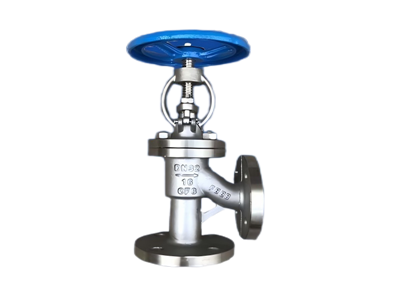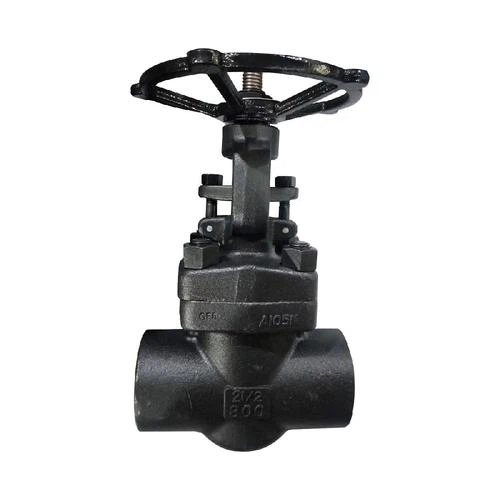
Product Introduction
American Standard Forged Steel Welding Shut-Off Valve (aka Forged Steel Welded Globe Valve) - precision fluid control, integral forging + butt/socket weld connection. Cuts off or connects media flow in industrial pipelines; outstanding high pressure/temp/corrosion resistance for harsh conditions. Self-tightening mid-cavity seal; Stellite cobalt hardfacing on disc/seat - leak-proof under fluctuations; deep packing box + corrosion inhibitor. Stem tempered+nitrided - high strength, wear/corrosion resistant; bearing, short stroke, back seal. API 602/ASME B16.34/API 598; Class 150–800, DN15–600, -29~425°C. Body A105/F304/F316/WCB; seal Stellite/PTFE. Medium: water, steam, oil, gas, acids, oxidizing. Manual/gear/pneumatic/electric. For petroleum, chemical, power, metallurgy. OEM/ODM.
Product Features
1. Superior Forged Steel Strength: Adopting high-quality forged steel materials (A105 carbon steel, F304/F304L/F316/F316L stainless steel, WCB), the valve body is formed by controlled pressure forging, which compresses the metal grain structure to make it denser and stronger - the grain flow follows the contour of the body for optimal mechanical properties. This forging process eliminates internal cavities, porosity, and inclusions common in castings, ensuring excellent structural continuity, resistance to cracking, vibration fatigue, and mechanical stress - far outperforming cast steel alternatives in durability and reliability. The forged body has higher tensile strength, yield strength, and impact toughness (Charpy V-notch) than a cast body of equivalent material grade. This makes the valve suitable for cyclic loading (thermal cycling, pressure surges) and safety-critical applications where through-wall leakage from casting defects would be catastrophic. The integral forging also means no body-bonnet casting parting line weakness - the body is a single, homogeneous forged piece. For high-pressure service (Class 600–800), the forged body provides the wall thickness and material integrity needed without the risk of casting shrinkage.
2. Strict American Standard Compliance: Fully compliant with ASME B16.34 (valves pressure-temperature rating), API 602 (compact forged steel gate, globe, and check valves for petroleum and natural gas industries), and API 598 (valve inspection and testing) standards for design, manufacturing, and testing - ensuring consistent dimensions, pressure ratings, and performance across global applications. The valve meets ANSI Class 150~800 LB pressure requirements (PN1.0~10MPa), making it compatible with American-style industrial pipelines and reducing installation and replacement risks for overseas buyers. The face-to-face dimensions, end-to-end dimensions, and pressure-temperature ratings are standardized per ASME B16.34, allowing direct interchangeability with other API 602 compliant valves. This compliance also simplifies project certification (CE/PED, third-party inspection) and ensures the valve can be specified in international oil & gas, power, and chemical projects that require API/ASME conformity. The welding end preparation (butt weld per ASME B16.25, socket weld per ASME B16.11) is standardized for compatibility with American piping codes (B31.1, B31.3, B31.4).
3. Excellent Sealing Performance: Equipped with a self-tightening seal structure in the middle cavity - the internal pressure itself energizes the body-bonnet seal (the higher the pressure, the tighter the seal), eliminating the need for massive bolt loads and ensuring reliable sealing even at high pressure. The valve flap (disc) and valve seat sealing faces are surfaced with Stellite cobalt-based hard alloy - providing exceptional wear resistance, heat resistance, and corrosion resistance, achieving reliable leak-proof performance even under high pressure and temperature fluctuations. The bonnet packing box is designed with sufficient depth, and the packing is added with corrosion inhibitors to ensure no leakage along the valve rod during operation - the deep packing provides multiple sealing rings (graphite, PTFE, or combination) for a robust stem seal. The corrosion inhibitor protects the stem and packing from aggressive media, extending packing life. For critical toxic/hazardous service, the deep packing can be configured as a live-loaded packing with lantern ring for flush/vent connections.
4. Welding Connection Stability: Adopting butt welding or socket welding connection methods, the valve integrates seamlessly with pipelines - minimizing fluid resistance (no flange gasket turbulence or bore mismatch) and preventing medium leakage at the connection point (no flange gasket to fail, no bolted joint to loosen). This is ideal for pipelines requiring high sealing and pressure resistance - especially high-pressure gas, toxic media, and high-temperature steam where flange leakage is a safety concern. The welding design also enhances the valve's adaptability to harsh working environments, such as high-temperature steam and corrosive media pipelines - the welded joint becomes a homogeneous part of the piping system, with the same pressure rating as the pipe. Butt weld ends (ASME B16.25) are used for larger sizes and higher pressure; socket weld ends (ASME B16.11) for small-bore high-pressure piping. The weld ends are prepped with standard bevel angles for consistent weld quality. For maintenance, the valve can be cut out and a new one welded in - though the forged construction and Stellite trim mean long service intervals.
5. Flexible & Durable Operation: The valve rod (stem) undergoes tempering and surface nitrogen treatment (nitriding) - ensuring high strength, wear resistance, and corrosion resistance. The nitrided surface provides a hard, wear-resistant case (HV ~600+) that resists galling and scoring from packing and stem bushing contact, while the tempered core provides toughness. The bearing structure design (thrust bearing at the stem-yoke interface) makes the valve operation light and flexible - reducing operator effort and actuator size requirements. The opening and closing stroke of the valve stem is relatively short (compared to a gate valve of the same size), enabling quick response to operating commands and improving work efficiency - the shorter stroke also means smaller actuator and less mounting space. Additionally, the back seal (backseat) structure ensures safe and stable operation during long-term use - when the valve is fully open, the stem backseat engages to protect the packing from system pressure, allowing online packing replacement and extending packing/service life.
6. Wide Medium Compatibility: Available in multiple material options, the valve can be customized to adapt to various media - including water, steam, oil, gas, nitric acid, acetic acid, and other oxidizing media, urea - meeting the diverse needs of different industrial sectors. Carbon steel (A105/WCB) for general water/steam/oil/gas service; stainless steel (F304/F304L) for nitric acid, oxidizing media, and general corrosive service; F316/F316L (molybdenum-bearing stainless) for acetic acid, chloride environments, urea, and more corrosive service. Stellite hardfacing on trim handles abrasive and high-temperature media; PTFE/reinforced PTFE seats provide chemical resistance and low friction. The wide temperature range (-29~425°C) covers cryogenic (with extended bonnet option) through high-temperature steam. This material versatility makes the valve suitable for petroleum refining (hydrocarbons, H2S), chemical processing (acids, solvents), power generation (steam, water), metallurgy (cooling water, hydraulic fluids), pharmaceutical (clean steam, solvents), and specialty industries (polycrystalline silicon, urea).
Working Principle
Forged Steel Welding Shut-Off Valve: handwheel/actuator → tempered+nitrided stem → disc → Stellite seat → forged globe body (Z-flow), weld ends. Turn handwheel - stem rotates+rises/lowers, disc moves to seat. Closing: disc descends, presses Stellite seat, leak-tight; self-tightening seal energizes; Z-flow throttles. Opening: disc rises, flow proportional; short stroke quick. Forged body, dense grain, Class 150–800, -29~425°C. Deep packing + inhibitor; back seal protects packing. Weld ends integrate, no flange leak. Manual/gear/pneumatic/electric. API602/API598.
Application Scenarios
Petroleum & Chemical Industry: Suitable for oil, natural gas, and chemical processing pipelines - used to control and regulate the flow of media in high-pressure, high-temperature working conditions, such as refineries (distillation, cracking, hydrotreating units), chemical plants (acids, solvents, reactors), and natural gas transmission systems (compressor stations, metering skids). The forged steel construction (A105/F316) handles high-pressure hydrocarbon and corrosive chemical service; Class 600–800 ratings suit high-pressure process piping. The welding connection (butt/socket weld) eliminates flange leakage - critical for toxic/hazardous hydrocarbons and chemicals. Stellite trim resists wire-drawing from high-velocity throttling. The self-tightening mid-cavity seal ensures bonnet integrity at high pressure. API 602 compliance is specifically tailored for petroleum and natural gas small-bore forged valves. The precise throttling of the globe valve suits flow control in refinery/chemical process loops.
Power Industry: Applied in thermal power plants, nuclear power plants, and boiler systems - used for fluid control in heating, cooling, and steam pipelines, ensuring the normal operation and safety of power generation systems. The high-temperature capability (up to 425°C with A105, higher with F11/F22 alloy) suits main steam, feedwater, and extraction steam lines. Forged steel construction with self-tightening bonnet handles high-pressure steam service. Stellite hardfacing on disc/seat resists wire-drawing from high-velocity steam. The welding connection provides leak-tight integration into high-pressure steam piping - no flange gasket to blow out. The backseat function allows online packing maintenance in power plants where downtime is costly. The precise throttling capability is essential for feedwater control, attemperation, and level control. Nuclear safety-related valves require rigorous qualification - the forged construction provides material traceability and integrity. OS&Y-style rising stem allows operators to verify valve position in safety-critical systems.
Metallurgical Industry: Used in smelting, steel production, and metal processing processes - controlling and regulating the flow of process liquids in high-temperature, high-pressure pipelines. Alloy steel or stainless steel body handles high-temperature process fluids and cooling water; Stellite hardfacing resists abrasive scale and particulates in metallurgical fluids. The robust forged construction withstands the vibration and thermal cycling common in steel mills and smelters. The welding connection integrates with process piping for leak-tight service. The nitrided stem resists wear from frequent operation in dusty mill environments. Manual handwheel operation is reliable in industrial environments; gear/pneumatic/electric actuators available for automated process lines. The short stroke allows quick response for process control. The wide material range (A105 to F316L) suits various metallurgical process fluids - from cooling water to corrosive pickling acids.
Pharmaceutical & Food Industry: Suitable for production line pipelines - controlling the flow of fluids to ensure product quality and hygienic safety (with food-grade material options available). Stainless steel (F304/F316L) body with PTFE packing and polished internal surfaces meets hygienic requirements for pharmaceutical and food production. The welding connection (butt weld) provides a smooth, crevice-free connection to sanitary piping - no flange gasket crevice where bacteria can accumulate. The self-tightening seal and deep packing prevent product contamination from external leakage or inward contamination. PTFE/reinforced PTFE seats provide chemical resistance for pharmaceutical solvents and cleaning agents (CIP/SIP). The precise throttling capability suits batch pharmaceutical reactors and food process control. The forged construction eliminates casting porosity that could harbor bacteria - a critical advantage for hygienic service. Clean-in-place (CIP) and steam-in-place (SIP) compatible with appropriate materials.
Other Industries (Marine, Water, Energy, Polycrystalline Silicon): Also applicable to shipbuilding (shipboard piping systems for fuel oil, lubricating oil, cooling water, steam, ballast - compact forged body fits engine room spaces; ABS/DNV certification available), water supply and drainage (water distribution networks, pump discharge, reservoir level control - carbon steel body, welding connection for leak-tight distribution), energy (hydropower penstock/turbine inlet, geothermal, district heating - high-pressure capability, forged strength), and polycrystalline silicon (high-purity process piping for silicon production - F304/F316L stainless, PTFE seals, polished internals for ultra-high purity). The welding connection is especially valuable in marine and hydropower applications where flange leakage would be difficult to repair. The wide material and pressure range makes the valve versatile across these diverse industries. Manual/gear/pneumatic/electric operation options suit both remote manual sites and automated process plants.
Quality Assurance
Every American Standard Forged Steel Welding Shut-Off Valve is designed/manufactured per API 602, ASME B16.34, BS 5352; tested per API 598. Raw materials: forged body MTR + tests, PMI SS; forging grain + UT verified; disc/seat Stellite - dimensional, flatness, bond, hardness; dimensions checked. Assembly: stem-disc, handwheel (bearing), alignment, self-tightening seal, packing + inhibitor, back seal, weld prep. Pressure: shell 1.5×PN, seat 1.1×PN, gas 0.6MPa (API598). Cycle test 5 cycles. Weld end verified. Batch traceable. Ship with certs, reports, manual. 18mo warranty. Third-party on request.
FAQ
Q1: What is an American standard forged steel welding shut-off valve, and why use a welding connection?
A: An American Standard Forged Steel Welding Shut-Off Valve (also called Forged Steel Welded Globe Valve) is a linear-motion globe valve with a forged steel body/bonnet and welded end connections (butt weld or socket weld), designed and manufactured per American standards (API 602, ASME B16.34, API 598). It is used to cut off or connect (isolate) the flow of media in industrial pipelines, with throttling capability. The "forged steel" means the body and bonnet are made by forging (hammering/pressing heated steel) rather than casting - producing a denser, stronger, defect-free material with aligned grain flow. The "welding connection" means the valve ends are welded directly to the pipeline (not flanged). Why welding connection? (1) Zero flange leakage: There is no flange gasket to fail, degrade, or leak - the welded joint becomes a homogeneous, permanent part of the piping system. This is critical for high-pressure gas, toxic media, hazardous chemicals, and high-temperature steam where flange leakage is a safety and environmental hazard. (2) Lower flow resistance: No flange gasket protrusion or bore mismatch - the weld end can be matched to the pipe bore for smooth, unobstructed flow, reducing turbulence and pressure drop. (3) Higher pressure rating: Welded joints can handle higher pressure than flanged joints of the same size - no bolt circle to limit pressure capacity. This is why welded ends are standard for Class 600+ high-pressure service. (4) Compact installation: No flange bolting clearance needed - the valve takes less space in tight piping runs, skids, and engine rooms. (5) Vibration resistance: Welded joints do not loosen from vibration (unlike bolted flanges) - ideal for reciprocating compressor discharge, high-vibration piping, and marine service. (6) Cost: For high-pressure small-bore piping, socket weld/butt weld fittings and valves are often more economical than flanged. Trade-offs: (a) Not easily removable - the valve must be cut out of the line for maintenance/replacement (but the forged construction + Stellite trim means long service intervals). (b) Requires welding expertise - installation needs qualified welders and proper weld procedures (ASME B31 codes). (c) Not for frequent disassembly - use flanged ends if the valve needs regular removal. Butt weld (ASME B16.25) is used for larger sizes (≥DN50) and high-pressure/high-temperature; socket weld (ASME B16.11) for small-bore (≤DN40) high-pressure. Choose welded ends for permanent, high-integrity, high-pressure installations; choose flanged ends for applications requiring frequent maintenance or removal.
Q2: What is the self-tightening mid-cavity seal, and how does it work?
A: The self-tightening mid-cavity seal (also called pressure-energized body-bonnet seal or pressure-seal bonnet) is a sealing design between the valve body and bonnet where the internal process pressure itself creates the sealing force - the higher the pressure, the tighter the seal. Here is how it works: (1) Instead of relying solely on bolt force to compress a gasket (as in a conventional bolted bonnet), the self-tightening design uses a sealing ring/gasket (usually a metal C-ring, silver-plated steel ring, or graphite composite) positioned between the body and bonnet in the mid-cavity (the internal chamber above the seat). (2) When the valve is pressurized, the internal pressure acts on the underside of the bonnet or a pressure-energizing ring, pushing it upward/outward against the sealing surface - compressing the gasket more forcefully as pressure increases. (3) This creates a self-energizing seal: at zero/low pressure, the initial bolt load provides the seal; at high pressure, the process pressure adds to the sealing force - so the seal actually improves with pressure. (4) The design eliminates the need for massive bolt circles required by conventional bolted bonnets at high pressure - making the valve lighter and more compact. Benefits: (a) Reliable at high pressure: Conventional bolted gaskets can be over-stressed or blow out at very high pressure; the self-tightening seal is inherently suited for Class 600–2500 service. (b) No gasket relaxation failure: As the gasket ages/relaxes, the pressure-energizing effect compensates - maintaining seal force. (c) Thermal cycling resistance: The self-energizing design accommodates thermal expansion/contraction better than a fixed bolt load. (d) Compact/lightweight: Smaller bolting, smaller bonnet flange. This valve's mid-cavity self-tightening seal works in conjunction with the Stellite-faced disc/seat (primary shut-off seal) and the deep packing box (stem seal) to provide three levels of sealing integrity. For very high pressure (Class 1500+), a true pressure-seal bonnet design is used; for medium pressure (Class 150–600), a bolted bonnet with spiral-wound gasket may be used - confirm the specific bonnet type for your pressure class. The self-tightening seal is a key reason this valve can achieve Class 800 rating in a compact forged body.
Q3: What is Stellite hardfacing, and why is it used on the disc and seat?
A: Stellite is a family of cobalt-chromium (Co-Cr) based hardfacing alloys (Stellite 6, Stellite 12, Stellite 21, etc.) applied by welding/surfacing (PTA - plasma transferred arc, or oxy-acetylene) onto the sealing faces of the valve disc and seat. It is the industry-standard trim material for severe-service valves. Composition: Typically ~50% cobalt, 25–30% chromium, 4–6% tungsten/molybdenum, 1–3% carbon, plus nickel/silicon. The high chromium provides corrosion resistance; tungsten/carbides provide hardness and wear resistance; cobalt provides toughness and heat resistance. Properties: (a) High hardness (HRC 38–45 depending on grade) - resists abrasion, erosion, and galling. (b) Excellent heat resistance - retains hardness up to ~500–600°C, does not soften at high steam temperatures. (c) Corrosion resistance - cobalt-chromium matrix resists oxidizing acids, steam, and many chemicals. (d) Weldability - can be reliably deposited onto steel/stainless substrates with good metallurgical bond. Why on disc and seat? The disc and seat are the primary shut-off sealing surfaces - they slide against each other every time the valve operates, and they are exposed to the full velocity and pressure of the process medium when throttling. Without hardfacing: (a) Wire-drawing: High-velocity fluid (especially steam) passing through a partially open valve erodes the soft steel sealing faces, cutting grooves (like a wire drawing die) - causing leakage that worsens over time. (b) Galling: Stainless steel or steel surfaces sliding under pressure can gall (cold-weld and tear), destroying the seal. (c) Abrasion: Particulates in the media scratch and wear the faces. Stellite hardfacing solves all three - it is hard enough to resist wire-drawing and abrasion, and its cobalt-chromium composition resists galling (unlike stainless-on-stainless). This valve uses Stellite cobalt-based hard alloy surfacing on both the valve flap (disc) and valve seat - providing a matched Stellite-on-Stellite sealing pair for maximum wear resistance and leak-tight performance, even under high pressure and temperature fluctuations. For less severe service, 13% Cr facing or PTFE/reinforced PTFE seats are available. Stellite trim is recommended for steam, high-pressure gas, throttling service, and any application where long leak-tight life is required. The hardfacing is applied to a minimum thickness (typically 1.5–3mm) and then ground/lapped to a fine finish for metal-to-metal sealing.
Q4: What sizes, pressures, temperatures, materials, and end connections are available?
A: Sizes: DN 15 – DN 600 mm (1/2" – 24") - a wide range from small-bore instrument/utility lines to medium process piping. Pressures: ANSI Class 150 – 800 LB (PN 1.0 – 10 MPa) - covers low-pressure water/gas through high-pressure process and steam service. Class 150/300 for general water/steam/oil; Class 600 for refinery/chemical process; Class 800 for high-pressure oil & gas and power. Temperatures: -29℃ ~ +425℃ (depends on material; carbon steel A105 typically -29~425°C; F304/F316 stainless similar; cryogenic extended bonnet option for lower temperatures; alloy steel F11/F22 for higher temperature ~500–565°C). Body materials: A105 (carbon steel, general oil/gas/water/steam), F304 (18-8 stainless, nitric acid/oxidizing/corrosive), F304L (low-carbon 304, weldability), F316 (18-8 Mo stainless, acetic acid/chloride/urea/more corrosive), F316L (low-carbon 316), Carbon Steel A216 WCB (cast carbon steel option for larger sizes). Sealing materials: Stellite Cobalt-Based Hard Alloy (hardfacing on disc/seat, for wear/heat/corrosion), PTFE (chemical resistance, low friction), Reinforced PTFE (higher pressure/temp than pure PTFE). End connections: Butt Welding (ASME B16.25 - for larger sizes ≥DN50, high-pressure/high-temperature, full penetration weld) and Socket Welding (ASME B16.11 - for small-bore ≤DN40, high-pressure, fillet weld). No flanged ends on this welding model (see flanged forged globe valve for flange option). Operation: Manual (Handwheel, standard), Gear-Operated (for larger sizes/high torque), Pneumatic (actuator, fail-open/fail-close), Electric (multi-turn actuator, customizable). Working medium: Water, Steam, Oil, Gas, Nitric Acid, Acetic Acid, Oxidizing Media, Urea, and more (match material to medium). Testing: Strength test 1.5×PN MPa (hydrostatic shell), Seal test 1.1×PN MPa (seat), Gas seal test 0.6MPa. Standards: Design/manufacturing API 602, ASME B16.34, BS 5352; testing API 598. The combination of welding ends + Class 800 + forged body makes this valve suitable for high-integrity, high-pressure installations where flange leakage is unacceptable. Provide your actual working conditions (medium, pressure, temperature, size, end connection, operation) for the correct configuration and material selection.
Q5: What is the back seal (backseat) function, and why is it important?
A: The back seal (also called backseat) is a secondary sealing feature in globe and gate valves where the valve stem has a tapered/shouldered section that engages with a matching seat in the bonnet when the valve is fully open. When the valve is opened to its full travel, the stem's backseat shoulder is pulled upward firmly against the bonnet backseat ring - creating a metal-to-metal (or soft) seal between the stem and bonnet, above the packing. How it works: (1) When the valve is fully open, the stem is at its highest position - the backseat shoulder on the stem contacts and seals against the backseat ring in the bonnet. (2) This creates a pressure boundary above the packing - the process pressure is now contained by the backseat, not by the packing. (3) The packing is relieved of pressure when the valve is fully open. Why it is important: (a) Online packing replacement: With the valve fully open and backseated, the packing can be replaced under pressure (using a packing follower and live-loaded gland) without shutting down the line - this is a huge maintenance advantage for process plants where downtime is costly. The backseat isolates the process pressure from the packing box, allowing safe packing change. (b) Extended packing life: When the valve is fully open (a common state for isolation valves that are normally open), the packing is not exposed to process pressure and temperature - reducing packing aging, extrusion, and leakage. This significantly extends packing service life. (c) Safety: If the primary packing fails while the valve is fully open, the backseat provides a secondary seal to prevent catastrophic stem leakage. (d) Stem protection: The backseat can also serve as a stem stop - preventing the stem from over-traveling and disengaging from the yoke. This valve's back seal structure ensures safe and stable operation during long-term use, extending the valve's service life. It works together with the deep packing box + corrosion inhibitor (primary stem seal) and the self-tightening mid-cavity seal (body-bonnet seal) for comprehensive sealing integrity. Note: The backseat is not a substitute for packing - it only functions when the valve is fully open. For throttling (partially open) service, the packing must contain the pressure. Backseats are typically metal-to-metal (not zero leakage) - they are for pressure isolation during maintenance, not for continuous emission control. For fugitive emission control (ISO 15848, API 622/624), a certified packing system with live loading is required in addition to the backseat. Always follow the manufacturer's instructions for online packing replacement - confirm the backseat is properly engaged and pressure is verified before attempting packing work.
Hot Tags: American Standard Forged Steel Welding Shut-Off Valve | DN15–600 | Class 150–800 | API 602 | Butt/Socket Weld, China American Standard Forged Steel Welding Shut-Off Valve | DN15–600 | Class 150–800 | API 602 | Butt/Socket Weld manufacturers, suppliers, factory, factory globe crane, competitive price pneumatic globe valve, manufacturers forged steel globe valve, factory double port globe valve, globe style control valves, suppliers globe non return valve
| Item | Specification |
|---|---|
| Product Name | American Standard Forged Steel Welding Shut-Off Valve (aka Forged Steel Welded Globe Valve) |
| Valve Type | Linear Motion Globe/Shut-Off Valve, Integral Forged Steel Body & Bonnet, Z-flow, Self-tightening Mid-cavity Seal, Stellite Hardfaced Disc/Seat, Back Seal (Backseat), Butt/Socket Weld Ends |
| Design & Manufacturing Standard | API 602, ASME B16.34, BS 5352 |
| Testing & Inspection Standard | API 598 |
| Nominal Pressure | ANSI Class 150 ~ 800 LB (PN 1.0 ~ 10 MPa) |
| Nominal Diameter | DN 15 ~ DN 600 mm (1/2" ~ 24") |
| Body Material | A105 (Carbon Steel), F304, F304L, F316, F316L (Stainless Steel), Carbon Steel A216 WCB - Customizable |
| Sealing Material | Stellite Cobalt-Based Hard Alloy (hardfacing on disc/seat), PTFE, Reinforced PTFE |
| Stem Design | Tempered + Surface Nitrided (high strength, wear/corrosion resistant), Bearing Structure (light operation), Short Stroke (quick response), Back Seal (Backseat) for packing protection/online maintenance |
| Working Temperature | -29℃ ~ +425℃ (Depends on material; cryogenic extended bonnet optional; F11/F22 alloy for higher temp) |
| Working Medium | Water, Steam, Oil, Gas, Nitric Acid, Acetic Acid, Oxidizing Media, Urea, etc. |
| Connection Type | Butt Welding (ASME B16.25), Socket Welding (ASME B16.11) |
| Operation Mode | Manual (Handwheel, standard), Gear-Operated, Pneumatic, Electric (Customizable) |
| Test Pressures | Strength Test: 1.5 × PN MPa (hydrostatic shell); Seal Test: 1.1 × PN MPa (seat); Gas Seal Test: 0.6 MPa |
| Certification & Warranty | ISO 9001 (standard); optional CE/PED, API 607 fire-safe, fugitive emission (ISO 15848/API 624), third-party inspection (BV/SGS/DNV/ABS); MTR EN 10204 3.1; PMI verification; NDT UT/MT/PT optional; MOQ 1 pc; Delivery 25–40d (std) / 40–60d (custom); Warranty 18 months from shipment; Ship docs: MTR, pressure test cert, dimensional/cycle reports, O&M manual, product cert |