

Sintering is a crucial process in the production of titanium components, which involves heating titanium powder to a temperature below its melting point to fuse the particles together. As a leading titanium powder supplier, we understand the importance of optimizing sintering conditions to achieve high-quality titanium products. In this blog post, we will delve into the key sintering conditions for titanium powder and their impact on the final properties of the sintered parts.
Temperature
The sintering temperature is one of the most critical factors affecting the densification and microstructure of sintered titanium components. Generally, the sintering temperature for titanium powder ranges from 1000°C to 1300°C. At lower temperatures, the diffusion rate of titanium atoms is relatively slow, resulting in incomplete densification and poor mechanical properties. As the temperature increases, the diffusion rate accelerates, promoting the growth of necks between particles and the elimination of pores. However, excessive temperatures can lead to grain growth, which may reduce the strength and ductility of the sintered parts.
It is important to note that the optimal sintering temperature depends on various factors, such as the particle size and shape of the titanium powder, the presence of impurities, and the desired properties of the final product. For example, finer powder particles have a larger surface area and higher reactivity, which allows for lower sintering temperatures. On the other hand, the presence of impurities, such as oxygen and nitrogen, can increase the sintering temperature required to achieve full densification.
Time
The sintering time is another important parameter that affects the densification and microstructure of sintered titanium components. The sintering time is typically in the range of 1 to 4 hours, depending on the sintering temperature and the desired density of the final product. Longer sintering times generally result in higher densities and better mechanical properties, as they allow more time for the diffusion of titanium atoms and the elimination of pores. However, excessive sintering times can also lead to grain growth and other undesirable microstructural changes.
In addition to the overall sintering time, the heating and cooling rates also play a crucial role in the sintering process. Rapid heating rates can cause thermal stresses and cracking in the sintered parts, while slow heating rates can result in incomplete densification. Similarly, rapid cooling rates can lead to the formation of martensite, a hard and brittle phase, which can reduce the ductility of the sintered parts. Therefore, it is important to control the heating and cooling rates carefully to ensure the quality of the sintered components.
Atmosphere
The sintering atmosphere is another critical factor that affects the quality and properties of sintered titanium components. Titanium is a highly reactive metal that readily reacts with oxygen, nitrogen, and other gases at high temperatures. Therefore, it is essential to sinter titanium powder in a controlled atmosphere to prevent oxidation and contamination.
The most commonly used sintering atmospheres for titanium powder are vacuum and inert gases, such as argon and helium. Vacuum sintering is the preferred method for high-quality titanium components, as it provides the highest level of purity and eliminates the risk of oxidation and contamination. Inert gas sintering is also a viable option, especially for large-scale production, as it is more cost-effective and easier to control than vacuum sintering.
In addition to preventing oxidation and contamination, the sintering atmosphere can also affect the densification and microstructure of sintered titanium components. For example, sintering in a reducing atmosphere, such as hydrogen, can promote the reduction of titanium oxides and improve the densification of the sintered parts. However, hydrogen can also cause embrittlement in titanium, especially at high temperatures and pressures. Therefore, it is important to carefully select the sintering atmosphere based on the specific requirements of the final product.
Pressure
The application of pressure during the sintering process can significantly improve the densification and mechanical properties of sintered titanium components. Pressure-assisted sintering methods, such as hot pressing and hot isostatic pressing (HIP), are commonly used to produce high-density titanium parts with excellent mechanical properties.

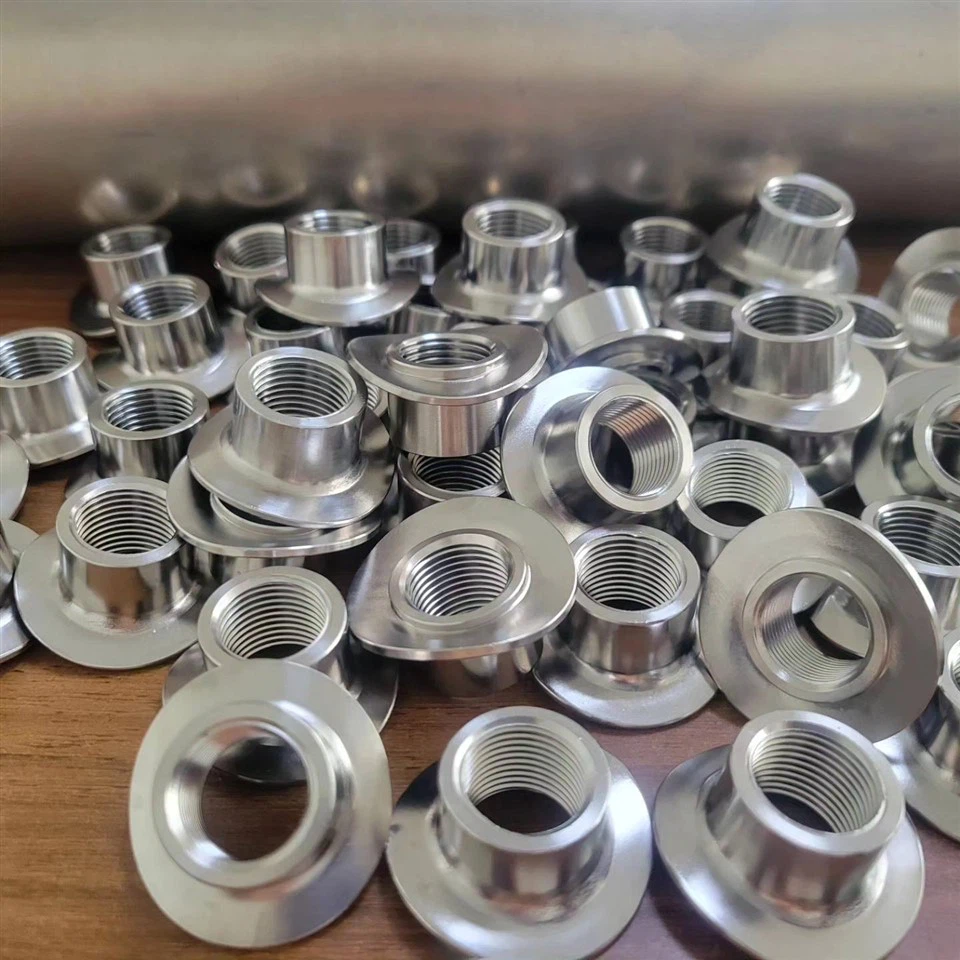
Hot pressing involves heating the titanium powder in a die and applying pressure simultaneously to promote densification. The pressure applied during hot pressing can range from a few megapascals to several hundred megapascals, depending on the specific requirements of the final product. Hot pressing is a relatively simple and cost-effective method for producing small to medium-sized titanium components with high densities and good mechanical properties.
Hot isostatic pressing (HIP) is a more advanced pressure-assisted sintering method that involves heating the titanium powder in a sealed container and applying isostatic pressure from all directions using an inert gas, such as argon. The pressure applied during HIP can range from 100 to 200 megapascals, and the temperature can range from 900°C to 1200°C. HIP is a more expensive and time-consuming method than hot pressing, but it can produce titanium components with near-net shape and excellent mechanical properties.
Applications of Sintered Titanium Components
Sintered titanium components have a wide range of applications in various industries, including aerospace, automotive, medical, and sports equipment. Some of the common applications of sintered titanium components include:
- Aerospace: Titanium is widely used in the aerospace industry due to its high strength-to-weight ratio, excellent corrosion resistance, and good fatigue properties. Sintered titanium components are used in aircraft engines, airframes, and other critical applications.
- Automotive: Titanium is also used in the automotive industry to reduce weight and improve fuel efficiency. Sintered titanium components are used in engine parts, exhaust systems, and other applications.
- Medical: Titanium is biocompatible and has excellent corrosion resistance, making it an ideal material for medical implants and devices. Sintered titanium components are used in dental implants, orthopedic implants, and other medical applications.
- Sports Equipment: Titanium is also used in the sports equipment industry to produce high-performance products, such as golf clubs, tennis rackets, and bicycle frames. Sintered titanium components are used to reduce weight and improve the strength and durability of these products.
Conclusion
As a titanium powder supplier, we understand the importance of optimizing the sintering conditions to achieve high-quality titanium products. The sintering temperature, time, atmosphere, and pressure are all critical factors that affect the densification, microstructure, and mechanical properties of sintered titanium components. By carefully controlling these parameters, it is possible to produce titanium components with excellent mechanical properties, high densities, and good corrosion resistance.
If you are interested in purchasing titanium powder or have any questions about the sintering process, please feel free to contact us. We are committed to providing our customers with the highest quality titanium powder and excellent customer service.
References
- German, R. M. (1996). Powder Metallurgy Science. Metal Powder Industries Federation.
- Schaffer, G. B., & Suryanarayana, C. (2001). Powder Metallurgy and Particulate Materials Processing. Minerals, Metals & Materials Society.
- Upadhyaya, G. S., & German, R. M. (2007). Sintering of Metals and Ceramics. Elsevier.
As a reliable Titanium Powder supplier, we offer high - quality titanium powder suitable for various sintering applications. Whether you are in the aerospace, automotive, medical, or sports equipment industries, our titanium powder can meet your needs. Our products are known for their consistent quality, purity, and excellent performance.
If you are interested in exploring the use of our titanium powder for your sintering processes, or if you have specific requirements regarding sintering conditions and need technical advice, we encourage you to reach out to us. We are more than willing to have in - depth discussions with you, understand your needs, and provide you with the best solutions. You can [initiate a procurement discussion] with us. Our team of experts is ready to assist you in achieving the best results with our titanium powder.
For more information about our other titanium products, you can visit the following links: