

In recent years, the demand for fresh water has been increasing exponentially due to population growth, industrial expansion, and climate change. Desalination, the process of removing salt and other impurities from seawater or brackish water, has emerged as a crucial solution to address water scarcity. As a leading supplier of titanium pipes, I am often asked whether titanium pipes can be used in the desalination industry. In this blog post, I will explore the suitability of titanium pipes for desalination applications, highlighting their advantages, challenges, and real - world applications.
The Desalination Industry: An Overview
Desalination plants are complex facilities that use various technologies to convert saline water into fresh water. The two most common desalination methods are reverse osmosis (RO) and multi - stage flash distillation (MSF). RO is a membrane - based process that forces water through a semi - permeable membrane, leaving salts and other contaminants behind. MSF, on the other hand, is a thermal process that involves heating the saline water and then allowing it to flash - evaporate in multiple stages.
Both RO and MSF systems require reliable piping materials to transport the saline water, brine, and fresh water throughout the plant. These pipes must withstand harsh operating conditions, including high pressures, high temperatures, and corrosive environments.
Why Titanium Pipes?
Titanium is a remarkable metal with a unique combination of properties that make it an excellent choice for desalination applications.
Corrosion Resistance
One of the most significant advantages of titanium pipes is their exceptional corrosion resistance. Seawater is a highly corrosive medium, containing a variety of salts, dissolved oxygen, and other aggressive substances. Traditional piping materials, such as carbon steel and stainless steel, are prone to corrosion in seawater, which can lead to leaks, pipe failures, and increased maintenance costs.
Titanium forms a passive oxide layer on its surface when exposed to oxygen, which acts as a protective barrier against corrosion. This oxide layer is self - healing, meaning that if it is damaged, it will quickly reform in the presence of oxygen. As a result, titanium pipes can withstand long - term exposure to seawater without significant corrosion, even in the presence of high levels of chloride ions.
High Strength - to - Weight Ratio
Titanium has a high strength - to - weight ratio, which means that it can provide the necessary structural integrity while being relatively lightweight. This is particularly important in desalination plants, where large amounts of piping are required. Lightweight pipes are easier to handle, install, and support, reducing installation costs and the overall weight of the plant.
Temperature Resistance
Desalination processes often involve high temperatures, especially in thermal desalination methods like MSF. Titanium pipes can withstand high temperatures without significant loss of strength or corrosion resistance. They can operate at temperatures up to 300°C (572°F) in seawater environments, making them suitable for use in both RO and MSF desalination plants.
Biofouling Resistance
Biofouling, the accumulation of microorganisms, algae, and other marine organisms on the surface of pipes, is a common problem in desalination plants. Biofouling can reduce the efficiency of the pipes, increase pressure drop, and promote corrosion. Titanium has natural biofouling resistance properties, which can help to minimize the growth of biofilms on the pipe surface. This reduces the need for chemical cleaning and maintenance, improving the overall efficiency of the desalination process.
Challenges and Considerations
While titanium pipes offer many advantages for desalination applications, there are also some challenges and considerations that need to be addressed.
Cost
One of the main drawbacks of titanium pipes is their relatively high cost compared to traditional piping materials. Titanium is a more expensive metal to produce, and the manufacturing process for titanium pipes is more complex. However, it is important to consider the long - term cost - effectiveness of titanium pipes. Their superior corrosion resistance and durability can result in lower maintenance costs, longer service life, and reduced downtime, which can offset the initial higher investment.
Welding and Fabrication
Titanium requires specialized welding and fabrication techniques due to its high reactivity with oxygen, nitrogen, and hydrogen at elevated temperatures. Improper welding can lead to the formation of brittle intermetallic compounds, which can reduce the mechanical properties of the welded joint. Therefore, it is essential to work with experienced welders and fabricators who are familiar with titanium welding procedures.
Real - World Applications
Titanium pipes have been successfully used in numerous desalination plants around the world. For example, in large - scale MSF desalination plants, titanium pipes are commonly used in the heat exchanger tubes, brine heaters, and condensate return lines. In RO desalination plants, titanium pipes can be used in the high - pressure piping systems, as well as in the pretreatment and post - treatment sections.

Many desalination projects have reported significant benefits from using titanium pipes, including improved plant reliability, reduced maintenance costs, and increased operational efficiency.
Our Titanium Pipe Products
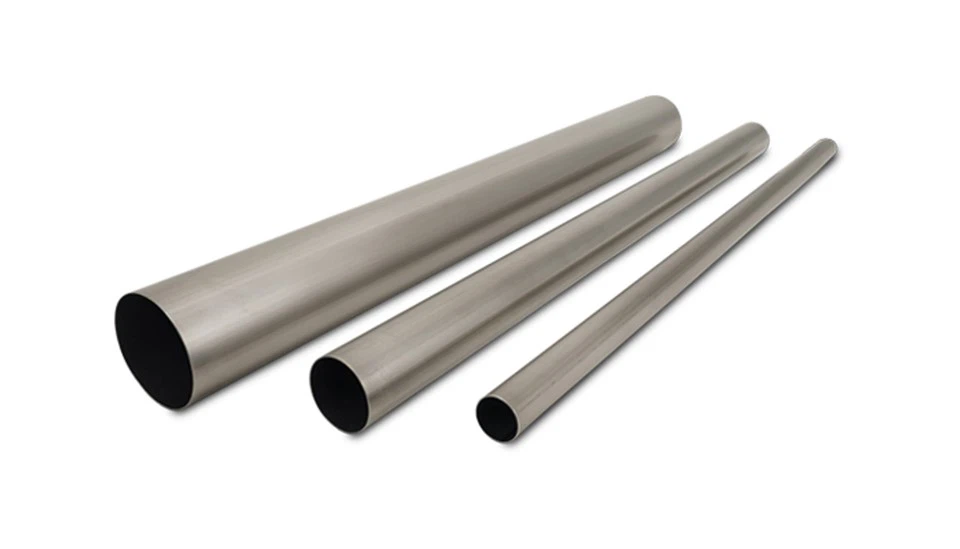
As a titanium pipes supplier, we offer a wide range of high - quality titanium pipes for desalination applications. Our product portfolio includes Titanium Straight Tube, which are available in various sizes and wall thicknesses to meet the specific requirements of different desalination processes. We also provide Titanium Stub End, which are used for pipe connections, and Titanium Fasteners to ensure secure and reliable installations.
Conclusion
In conclusion, titanium pipes are an excellent choice for the desalination industry. Their exceptional corrosion resistance, high strength - to - weight ratio, temperature resistance, and biofouling resistance make them well - suited to the harsh operating conditions of desalination plants. While there are some challenges, such as cost and specialized fabrication requirements, the long - term benefits of using titanium pipes, including reduced maintenance costs and increased plant reliability, make them a viable option for desalination applications.
If you are involved in a desalination project and are considering using titanium pipes, I encourage you to contact us to discuss your specific needs. Our team of experts can provide you with detailed information about our products, technical support, and assistance with the selection and installation of titanium pipes. We are committed to providing high - quality products and excellent customer service to help you achieve a successful desalination project.
References
- Jones, D. A. (2002). Principles and Prevention of Corrosion. Prentice Hall.
- ASM International. (2000). Titanium and Titanium Alloys. ASM Handbook, Volume 2.
- Desalination Publications. (2015). Desalination Technology and Engineering. Elsevier.